 CEMarked CEMarked
Explore our export-certified power line filters engineered for industrial drives, renewable energy converters, high-speed rail, EV fast-charging stations, and high-frequency switched-mode electronics.
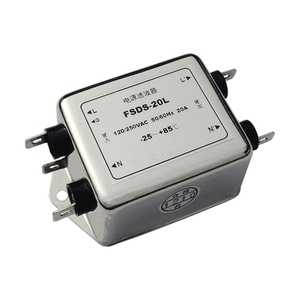
High-attenuation power line filter designed for high-power CNC machines, variable speed drives (VFD), and industrial automation cabinets.
Technical Data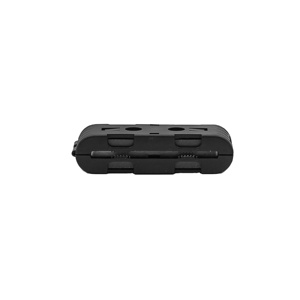
51.5*10*15-1.6 snap-open noise suppressor ideal for power adapters, peripheral lines, data harnesses, and high-frequency broadband damping.
Technical Data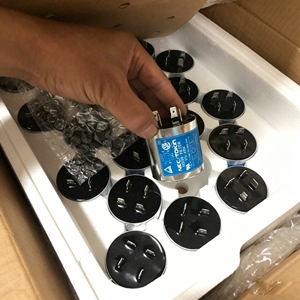
Chassis-mount power line filter providing dual-stage differential and common-mode attenuation for switch-mode lab rectifiers.
Technical Data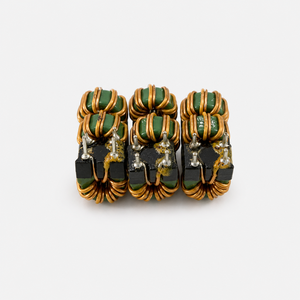
High-permeability nanocrystalline/ferrite toroidal inductor tailored for LED driver circuits, compact SMPS, and custom OEM boards.
Technical Data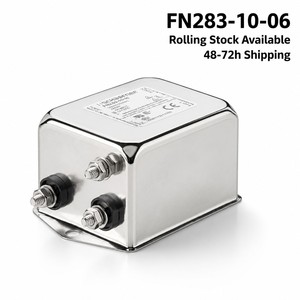
Direct alternative to FN283-10-06 with integrated IEC inlet fuse holder, optimized for rolling stock, test instrumentation, and medical racks.
Technical Data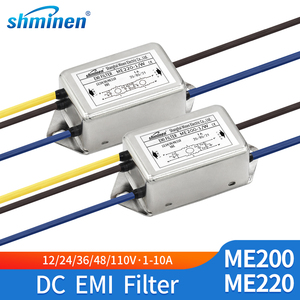
Low-ripple wire-lead DC EMI suppression filter engineered for telecommunication base-stations, embedded systems, and sensitive computing.
Technical Data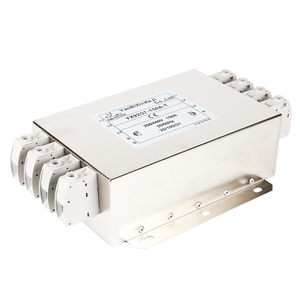
CE-certified high-current noise barrier engineered specifically for high-capacity EV DC fast-charging stations and large battery storage skids.
Technical Data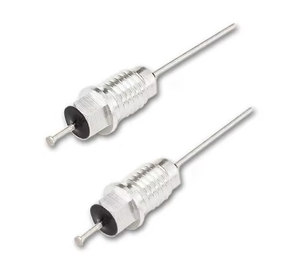
Hermetically sealed threaded bushing filter for aerospace, defense enclosures, microwave assemblies, and high-frequency RF shielding walls.
Technical DataCombining over 25 years of electrical engineering expertise with advanced automated testing infrastructure across a 5,500 m² state-of-the-art facility.
Years of proven magnetics and power quality engineering background since 1990.
Advanced manufacturing, core winding, vacuum potting, and automated testing floor area.
Computerized routine tests on insertion loss, dielectric strength, and leakage current before dispatch.
Current handling capacity spanning compact PCB components up to megawatt-scale industrial filter banks.
Automatic computerized test panels validating both single-phase and three-phase attenuation performance across the CISPR-mandated 150kHz–30MHz frequency range.
Double Voltage Double Frequency (DVDF) induced overvoltage and high-potential dielectric breakdown testing to eliminate internal insulation arcing vulnerabilities.
High-accuracy digital LCR meters and milli-ohm winding resistance checks verify magnetic core permeability, balance, and minimal DC thermal dissipation.
Multi-range insulation resistance testers (Megger) combined with infrared thermographic inspection under 100% nominal load to prevent thermal hot spots in real-world duty.
A comprehensive analysis of high dv/dt semiconductor transients, common-mode vs. differential-mode decoupling, and insertion loss optimization.
The global shift toward Silicon Carbide (SiC) and Gallium Nitride (GaN) power switches delivers unmatched switching frequencies (>100 kHz) and ultra-fast rise times (dv/dt exceeding 50–100 kV/µs). While this significantly reduces thermal and switching losses, it introduces severe parasitic capacitive coupling to ground.
Our engineered filters incorporate multi-stage nanocrystalline core common-mode chokes featuring ultra-low inter-winding capacitance, guaranteeing broad-spectrum damping up to 100 MHz without core saturation.
The insertion loss (IL) of an EMI filter is not a static scalar; it is intrinsically linked to the termination impedances of the source (mains/grid) and the load (inverter/rectifier). Classical 50Ω / 50Ω CISPR 17 laboratory measurements rarely mirror real-world industrial environments where line impedance varies drastically.
We tailor filter topologies based on maximum impedance mismatch principles: pairing inductive filter inputs with low-impedance power sources, and capacitive stages against high-impedance industrial loads.
Safety regulations (IEC 60601-1 for medical equipment, IEC 62368-1 for IT/AV, and IEC 61800-5-1 for motor drives) impose stringent upper bounds on line-to-ground leakage currents. However, higher Y-capacitance values are fundamentally required to shunt low-frequency common-mode noise.
Our high-permeability magnetic materials enable superior common-mode inductance per unit volume, achieving necessary attenuation compliance while maintaining leakage currents under 0.5 mA for medical and sensitive commercial systems.
| Series Configuration | Operating Voltage | Rated Current Range | Attenuation Bandwidth | Leakage Current Rating | Target Industrial Compliance |
|---|---|---|---|---|---|
| Three-Phase 3-Wire (Delta) | 250–480 VAC (50/60Hz) | 10A to 800A | 150 kHz – 30 MHz (>65dB) | < 3.5 mA @ 400VAC | EN 61800-3 C1/C2 CNC, VFDs |
| Three-Phase 4-Wire (Wye) | 250–440 VAC (N-ground) | 5A to 400A | 100 kHz – 50 MHz (>75dB) | < 2.0 mA @ 230VAC | CISPR 11 Class A EV Stations |
| Single-Phase Chassis Filter | 110–250 VAC | 1A to 36A | 150 kHz – 30 MHz (>55dB) | < 0.5 mA (Industrial) / < 5µA (Medical) | IEC 60601-1 / UL 1283 Medical/Lab |
| DC High-Current Feedthrough | 0–1200 VDC | 10A to 600A | 10 kHz – 1 GHz (>80dB) | Negligible (DC Steady State) | MIL-STD-461 Renewable/BESS |
Strategic insights for procurement directors, system integrators, and electrical engineering managers planning 2025–2030 component lifecycles.
The deployment of 350kW to 1MW Megawatt Charging Systems (MCS) demands high-voltage DC bus filtering capable of dampening broadband ripple without excessive thermal derating. Filter architectures must withstand continuous operation at 1000V DC while maintaining robust EMC containment under harsh outdoor ambient temperatures (-40°C to +85°C).
Industrial machinery footprints are shrinking, requiring power filter integration directly into drive enclosures or servomotor housings. This trend accelerates the demand for integrated terminal blocks, book-style slimline chassis designs, and threaded feedthrough structures that occupy up to 40% less cabinet volume while eliminating installation wiring errors.
Global supply chain volatility has led engineering teams away from multi-tiered distributors toward direct manufacturer collaboration. OEMs require fast-turnaround customized insertion loss curves, flexible mechanical bracket tooling, and transparent raw material provenance for copper, electrical grade steels, and film capacitors.
Authoritative technical guidance covering filter selection, compliance testing, grounding best practices, and installation protocols.
Common-Mode (CM) noise flows in the same direction on all power conductors (Phase and Neutral/Ground) and returns through the protective ground path, primarily generated by parasitic capacitance to earth during fast transistor switching. Differential-Mode (DM) noise flows in opposite directions through the supply lines (line-to-line), typically caused by switching rectifiers and inductor ripple. EMI filters incorporate common-mode chokes and Y-capacitors to cancel CM noise, alongside X-capacitors and line inductors to dampen DM noise.
CISPR 17 measures filter insertion loss within a standardized 50-ohm source and 50-ohm load laboratory impedance framework. In operational installations, electrical distribution grids possess inductive source impedances that vary across frequencies, while motor drives and switch-mode supplies present non-linear, dynamic load impedances. Consequently, actual in-situ attenuation can diverge. Our engineering team assists with mismatch calculations and provides 0.1Ω/100Ω worst-case insertion loss data upon request.
A 3-phase 3-line filter is specified for Delta-connected loads and systems without a neutral conductor, such as standard 3-phase variable frequency drives (VFDs), motor pumps, and industrial compressors. A 3-phase 4-line filter includes an integrated neutral filtering branch and is mandatory for Wye-connected systems powering single-phase internal auxiliary loads, programmable logic controllers, and EV charging stations where unbalanced neutral return currents carry high-frequency harmonics.
EMI filters utilize Y-capacitors connected from line to chassis ground. In AC systems, a continuous capacitive current (leakage current) flows into the protective earth. If multiple filtered machines or filters with excessively large Y-capacitances operate downstream of a 30mA RCD, cumulative leakage will trip the breaker. For installations requiring high RCD sensitivity, we engineer specialized low-leakage or medical-grade filters (leakage current < 0.075 mA to 0.5 mA) utilizing advanced magnetic nanocrystalline cores.
Grounding impedance is the single most common cause of EMI filter performance failure. Even a 10cm wire lead introduces substantial parasitic inductance at frequencies above 1 MHz (approx. 10nH/cm), degrading high-frequency common-mode attenuation. The filter metal enclosure must be bolted directly to an unpainted, conductive, zinc-plated metal backplate of the cabinet to establish a broad-area, RF-low-impedance bonding path to earth.
Yes. In addition to our standard portfolio spanning 1A to 800A, we specialize in tailor-made OEM/ODM topologies. Our comprehensive manufacturing capabilities—including computerized winding, vacuum varnish impregnation, custom sheet-metal metal stamping, and internal testing laboratories—allow us to design custom terminal styles, busbar entries, multi-stage cascading filters, and high-voltage DC units up to 1500VDC.
Submit these primary parameters to our technical sales team for rapid compliance review, simulation, and factory pricing.
Clarify nominal operating voltage (single-phase 115/230VAC, three-phase 400/440/480VAC, or DC 0-1000V), nominal grid frequency (50/60/400Hz), and continuous RMS load current at maximum operating ambient temperature.
Identify target standard certifications (CISPR 11 Class A or B, CISPR 32, EN 61800-3 C1/C2/C3, MIL-STD-461G). Provide spectrum analyzer scans if troubleshooting existing equipment experiencing EMI test failures.
Specify cabinet dimensions, mounting restrictions (book-style side mount, bottom chassis, or DIN-rail), termination style (screw terminal block, quick-on spade, copper busbars, or wire leads), and environmental protection class (IP20, IP54).