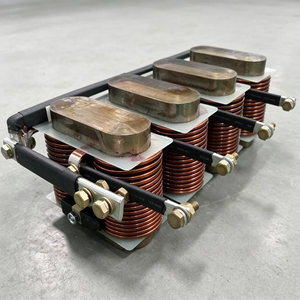
Harmonic Suppression
 CEMarked
Strategic analysis for EPC contractors, electrical plant engineers, and global procurement divisions evaluating Variable Frequency Drive enclosures for mission-critical automation.
In modern process industries—ranging from continuous petrochemical cracking and deep-well water extraction to high-speed metallurgy and automotive assembly—the electric motor drive system is the nerve center of energy expenditure and operational precision. A Variable Frequency Drive (VFD) Control Panel is significantly more than a mechanical housing for inverter electronics. It represents an intricate electro-mechanical ecosystem designed to safeguard sensitive power semiconductors (IGBTs), suppress high-frequency harmonic distortions (IEEE 519 compliance), manage severe thermal dissipation, and establish robust deterministic communication via industrial fieldbuses (Profinet, EtherNet/IP, Modbus TCP).
When selecting among the top 10 VFD control panel exporters, enterprise procurement teams encounter profound disparities in assembly topology, magnetic filtering quality, and factory acceptance testing (FAT) regimens. A premier exporter must not only deliver cost-effective sheet metal and drive assembly; they must provide full-spectrum engineering autonomy: in-house magnetic reactor manufacturing, certified high-capacity busbar fabrication, computerized thermal modeling, and rigorous testing for induced overvoltages (DVDF) and partial discharge. Below, we present an exhaustive technical evaluation of market-leading export configurations alongside enterprise engineering benchmarks.
Select industrial solutions engineered for harsh ambient conditions, extreme duty cycles, and global standard cross-compatibility.
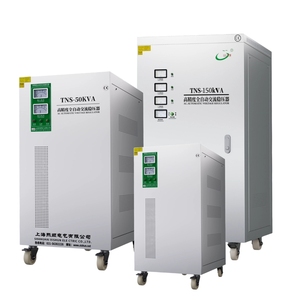
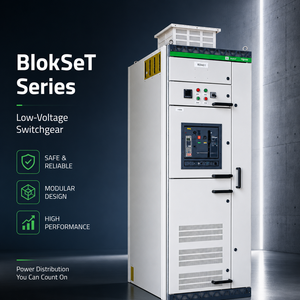
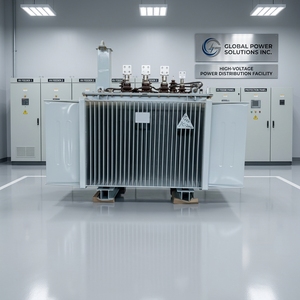
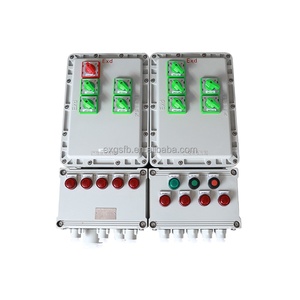
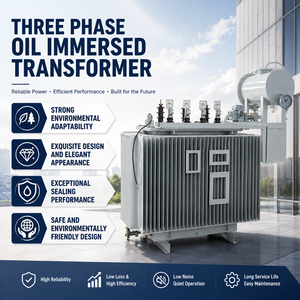
A multi-point technological breakdown of electromagnetic compatibility, active thermal circuits, and structural isolation.
Nonlinear diode rectifiers in typical 6-pulse VFDs introduce substantial 5th, 7th, 11th, and 13th harmonic currents, creating upstream transformer heating and THD(i) figures exceeding 35%. Tier-1 exporters integrate high-saturation amorphous DC link chokes and line reactors to reduce Total Harmonic Distortion to <8% (or <5% using 18-pulse split-phase transformers), ensuring compliance with IEEE 519 grid codes.
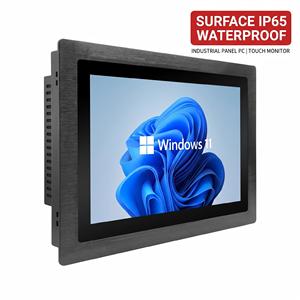
Export enclosures incorporate hardened IP65 industrial panel computers and edge gateways. These fanless Intel-powered terminals execute real-time FFT analytics, bearing vibration telemetry via Modbus/TCP, and predictive IGBT health monitoring. This architecture eliminates unexpected down-time in remote plants through automated cloud alerting and on-panel parameter cloning.
Global utility grids exhibit severe prospective fault levels. Quality exporters engineer electrolytic grade copper (99.9% IACS conductivity) busbars braced to withstand short-circuit stresses exceeding 65kA/100kA for 1 second under IEC 61439-1/2 and UL 508A protocols. Flame-retardant SMC/DMC poly-insulators prevent catastrophic phase-to-phase flashovers under fault transients.
A 250kW variable speed drive rejects approximately 6kW to 8kW of heat through its switching heat sinks. Exporters apply computational fluid dynamics (CFD) to design dedicated cold-air plenums, segregated heat-sink exhaust chimneys, and closed-loop CFC-free industrial air conditioners (R134a/R410a), preventing internal hot-spots and capacitor electrolyte dry-out.
For installations in refineries, offshore platforms, and grain terminals, exporters produce heavy-duty cast aluminum or 316L stainless flameproof housings (Zone 1/21, Class I Div 1). These assemblies utilize flame-path joints capable of withstanding internal deflagrations without propagating ignited gases into the surrounding volatile atmosphere.
Steep switching edges (high dv/dt rates exceeding 5000V/μs) emitted by modern IGBTs cause reflection wave phenomena along motor cable runs over 50 meters, doubling the peak voltage at the motor terminals. Exporters integrate tuned LC sine-wave output filters that smooth PWM pulses into clean sinusoidal waveforms, preserving winding enamel and motor bearing life.
Technical selection reference for specifying engineers and procurement managers across global power sectors.
| Panel Architecture | Voltage Range | Typical Ingress / Enclosure | Harmonic Mitigation Standard | Target Applications | Compliance Tier |
|---|---|---|---|---|---|
| Standard Industrial VFD (6-Pulse) | 380V – 480V AC (3-Phase) | IP42 / IP54 (Rittal / Sheet Steel) | AC Line Reactor (3% - 5% Z) | HVAC, Booster Pumps, Simple Conveyors | IEC 61439 / CE |
| Clean Power Multi-Pulse (12/18-Pulse) | 400V – 690V AC | IP54 Forced Air / Heat Exchanger | Phase-Shift Split-Winding Transformer | Cement Mills, Slurry Pumps, Extruders | IEEE 519 / CE |
| Active Front End (AFE) Regenerative | 400V – 690V AC | IP54 Closed-Loop AC Chilled | LCL Filter (THD < 3%), Bi-directional | Cranes, Hoists, Dynamometers, Mining | UL 508A / CE |
| Flameproof Hazardous Area Ex d / Ex p | 380V – 660V AC | Ex d IIC T6 Gb / Cast Aluminum or SS | Internal DC Choke + Output Sinus Filter | Offshore Rigs, Chemical Refineries | ATEX / IECEx |
| Medium Voltage Modular VFD (Multi-Cell) | 3.3kV – 11kV AC | IP41 / IP54 Air-to-Water Exchange | Integral Multi-Secondary Isolation XFMR | Boiler Feed Pumps, Power Plant Draught Fans | IEC 62477-2 / CE |
Originating from an automation legacy established in 1990 and expanded across a 5,500 m² state-of-the-art facility in Santej, Ahmedabad, our engineering ecosystem unifies precision magnetic core winding, automated busbar punch-bending, and computerized high-voltage FAT routines under one roof.
Full-load automated routines validating phase balancing, dynamic loss analysis, and voltage stabilization on 1-phase and 3-phase systems.
Double Voltage Double Frequency verification to confirm inter-turn insulation resilience under high transient switching states.
Precise Open-Circuit and Short-Circuit loss measurement ensuring maximum electromagnetic efficiency and thermal modeling verification.
Component-level inductance, capacitance, and resistance profiling to eliminate resonant harmonic frequencies in filter stages.
Calibrated thermographic inspection under continuous full-ampere test runs to identify resistance bottlenecks before ocean shipping.
25V AC/DC micro-ohmmeter validation of mechanical terminations, earth-grounding integrity, and split-winding symmetrical resistance.
Key technological transformations steering project specifications across Europe, North America, the Middle East, and Southeast Asia.
Next-generation VFDs are incorporating Wide Bandgap (WBG) SiC semiconductors, increasing switching frequencies while slashing thermal losses by up to 40%, demanding faster-reacting output magnetic chokes.
Modern export tenders mandate integrated cellular or Industrial Ethernet edge nodes that stream real-time current signatures to predictive maintenance platforms, anticipating bearing faults before trip thresholds.
Grid operators globally enforce stringent penalty structures for high THD(v). Procurement trends indicate an aggressive shift from passive traps toward active harmonic filters (AHFs) and low-loss amorphous reactors.
Global EPCs demand documented Environmental Product Declarations (EPDs). Life-cycle copper recovery, high-grade CRGO electrical steel lamination, and non-toxic varnish encapsulation are non-negotiable tender criteria.
The strategic advantage of sourcing from specialized manufacturers lies in the complete convergence of magnetic design and enclosure automation. A standard switchgear shop purchases off-the-shelf transformers and drops them into generic cabinets, inevitably leading to mismatched impedances and localized hotspots. Conversely, an established exporter controls the design from the fundamental wire turn: optimizing primary-to-secondary turns ratios for multi-pulse rectification, vacuum-pressure impregnating (VPI) every coil with Class H resin, and verifying dielectric boundaries with automated computerized Megger and DVDF test sets.
Detailed technical answers addressing critical export compliance, logistics, sizing, and electrical parameters.
To ensure precise electrical and mechanical sizing, buyers must provide: 1) Motor nameplate data (rated kW/HP, full load amperes, voltage, base frequency, and insulation class); 2) Driven load torque profile (variable torque for centrifugal pumps/fans vs. constant torque for crushers/conveyors); 3) Power grid characteristics (supply voltage, frequency, prospective short circuit fault level in kA); 4) Ambient constraints (minimum/maximum ambient temperatures, altitude derating above 1000m, presence of corrosive gases or conductive dust); 5) Ingress protection (IP42 for clean electrical rooms up to IP55/IP65 for washdown or outdoor petrochemical zones); and 6) Communication protocol requirements (Profinet, EtherNet/IP, Modbus TCP).
Line reactors are installed on the AC input side of the variable speed drive. They provide series inductance that buffers against utility line surges, prevents nuisance overvoltage tripping, and curbs low-frequency current harmonics, typically reducing total harmonic distortion from ~80% down to roughly 30-35%. A DC link choke is installed inside the drive's intermediate direct-current circuit between the rectifier and the capacitor bank. DC chokes offer equal or superior harmonic attenuation in a lighter, more compact physical envelope without causing an AC voltage drop across the input terminals. Combining a 3% AC line reactor with an amorphous DC choke yields optimal protection and compliance with IEEE 519 standards.
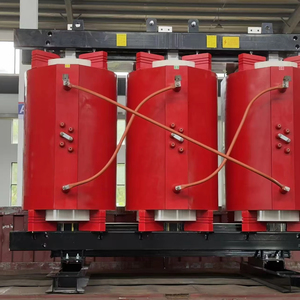
Cast resin and VPI (Vacuum Pressure Impregnated) dry-type transformers eliminate flammable dielectric fluids entirely, removing the hazards of fire propagation, toxic smoke emission, and fluid containment leaks. This makes them universally compliant with indoor factory installations, multi-level manufacturing plants, and offshore platforms. Furthermore, cast resin windings exhibit exceptional mechanical strength against the high vibrational and electrodynamic stress induced by repetitive motor inrush currents and harmonic content, providing high moisture resistance without the chemical degradation inherent in oil-based coolants.
For European Union destinations, control assemblies must carry the CE mark, proving compliance with the Low Voltage Directive (LVD 2014/35/EU) and Electromagnetic Compatibility Directive (EMC 2014/30/EU). In North America, compliance with UL 508A (Industrial Control Panels) and CSA C22.2 No. 14 is mandatory. For global installations, panels must be built and routine-tested according to IEC 61439-1 & 2 standards. Standard factory routine test reports must verify dielectric insulation resistance, double voltage double frequency (DVDF), high-pot test voltage, milliohm continuity, protective bonding resistance, and functional sequence testing.
Heavy VFD panels and transformers are subjected to severe humidity, saline atmospheres, and dynamic shock during ocean shipping. Tier-1 exporters implement vacuum-sealed aluminum-barrier foil bags enclosing silica gel desiccant packs to prevent condensation and corrosion. External cabinets are secured to heavy-timber wooden skids with anti-vibration damping blocks, protected by high-impact corner guards, and enclosed in fumigated, ISPM-15 certified seaworthy plywood crates. Enclosure lifting eyes are rated to ensure safe off-loading at container terminal cranes without inducing structural distortion.
Initiate direct technical engagement for custom VFD panel design, multi-pulse drive transformers, harmonic calculations, and turnkey export estimates tailored to your project location.
Send an Inquiry