 CEMarked CEMarked
Manufactured under rigorous factory-grade quality standards to prevent brownouts, neutral displacement, harmonic overheating, and line sags across automation lines.
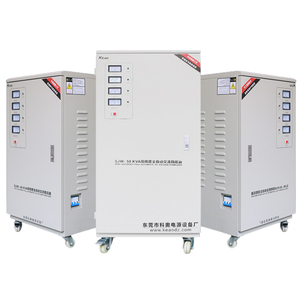
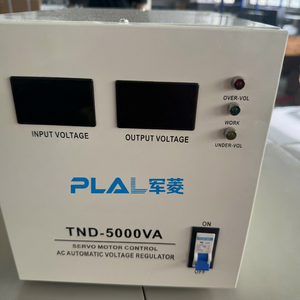
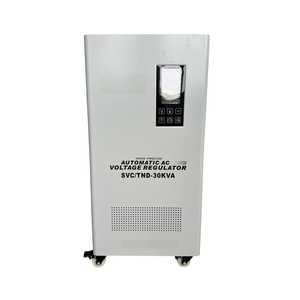
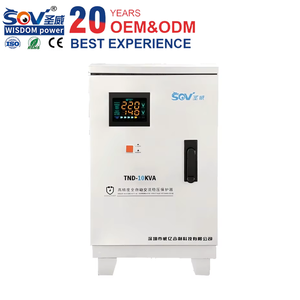
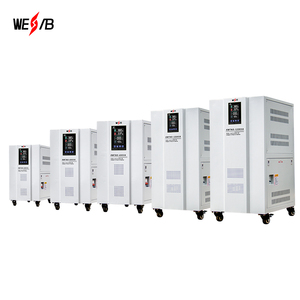
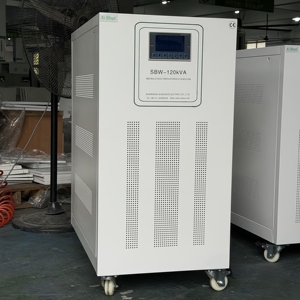
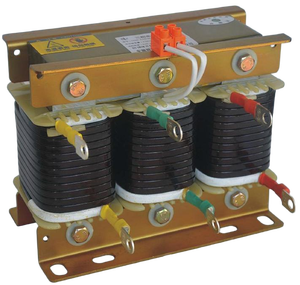
In dynamic electrical infrastructures, industrial equipment such as CNC machineries, high-tonnage injection molders, SMT automated assembly lines, and high-frequency telecom transceivers encounter substantial performance degradation from incoming utility line fluctuations. An Automatic Servo Voltage Stabilizer (AVR) acts as a real-time electromagnetic stabilizer. Unlike electronic tap changers or solid-state triac circuits that step voltages in distinct increments (creating harmonic switching spikes and phase distortions), servo systems deliver absolute continuous waveform correction with smooth voltage gradients.
The physical operation relies on a closed-loop electromechanical feedback design. The system incorporates an electrolytic-grade copper variable autotransformer (variac), a series buck-boost compensation transformer, a high-torque reversible AC/DC servo servomotor, and a high-speed digital microprocessor controller board. When the sampling transformer detects an input potential departure from the set reference (e.g., ±1% drift from 380V or 400V 3-phase line-to-line), the microcontroller instructs the high-torque servo motor via a pulse-width modulation (PWM) drive. The motor drives a carbon roller or low-wear carbon brush assembly across the polished winding tracks of the toroidal or column autotransformer.
The induced differential voltage from the secondary winding of the variac feeds directly into the primary of the buck-boost transformer. Depending on vector polarity, the buck-boost transformer injects an in-phase or anti-phase compensating voltage into the load series bus. The resultant output voltage maintains exceptionally tight tolerance (±1% to ±1.5% balanced across all three phases), with zero waveform clipping, near-zero change in harmonic distortion (THD < 1%), and overall system efficiency exceeding 98.5% at rated industrial capacity.
By delegating current loads to a rugged series transformer and using the servo-variac exclusively for differential vector correction, brush contact currents decrease dramatically, boosting mean time between maintenance (MTBM) beyond 45,000 operation hours.
For unbalanced multi-wire installations (3-phase 4-wire TNS/SBW configurations), individual phase sampling cards isolate each phase. Independent motors adjust line-to-neutral offsets without causing neutral shifting under severe 100% load imbalances.
Operating entirely on fundamental inductive coupling principles, servo AVR systems generate no switching harmonics, high-frequency radio interference (RFI), or common-mode noise, making them compatible with sensitive medical imaging and PLC logic.
Global original equipment manufacturers (OEMs), engineering procurement construction (EPC) contractors, and industrial facility directors face modern challenges in power delivery. As factories transition to Industry 4.0 standards, voltage stabilization shifts from a passive protection unit into an active node within smart plant management. International procurement strategies now focus on the following advancements:
1. Convergence with IoT and Industrial Fieldbus Architectures: Contemporary procurement specifications increasingly require native RS-485 Modbus-RTU, Ethernet IP, or Profinet communication boards integrated into the AVR control cabinet. Plant engineers can track real-time phase voltage, operating winding temperatures via embedded PT100 sensors, cumulative carbon brush contact cycles, line frequency anomalies, and kVA demand trends remotely through SCADA environments.
2. Hybrid Electromagnetic and Static Compensation: The development of hybrid stabilizers matches mechanical servo accuracy with transient semiconductor suppression. Solid-state sub-cycle clipping circuits now mitigate millisecond-level surge voltages and lightning transients, protecting the servo mechanism so it can focus on deeper, continuous voltage swings without excessive mechanical fatigue.
3. Extreme High-Temperature Class-H/Class-C Insulation Protocols: Industrial facilities in harsh desert conditions, tropical manufacturing hubs, and enclosed heavy mining containers demand higher insulation ratings. Modern procurement specifies non-hygroscopic DuPont Nomex paper, vacuum pressure impregnated (VPI) varnish, and oxygen-free electrolytic Class 200 copper magnet wires to resist localized hotspots up to 180°C without degradation.
4. Integrated Detuned Harmonic Filtering: Because variable frequency drives (VFDs), welding robots, and switching power supplies inject 5th, 7th, and 11th harmonic currents into the factory grid, stabilizers are frequently bundled with low-voltage detuned iron-core series reactors and DC link chokes. This combined arrangement prevents harmonic resonance, lowers eddy current losses, and avoids early failure in autotransformer cores.
Talk directly with our magnetic design engineers. Custom windings, wide input ranges (±30%), bypass panels, and IP54 outdoor enclosures engineered to spec.
With more than 25 years of engineering experience and a 5,500 m² production complex in Santej, Ahmedabad, our facility designs, winds, builds, and tests magnetic assemblies, control transformers, reactors, and voltage stabilization systems. Backed by an automation heritage dating to 1990—building PC, PLC, SCADA, and hazardous-area flameproof control panels—our manufacturing philosophy focuses on how our magnetic equipment integrates with field motor control centers (MCC) and power distribution switchboards.
We manufacture stabilizers, buck-boost modules, series reactors, and power transformers ranging from 50VA up to 5000kVA and reactors up to 2500A. Every single unit leaves our facility with verified computerized inspection certificates, ensuring dependable performance right after installation.
Share your site voltage variations, load parameters, and project environment. Our engineering team will review your application and provide technical drawings and pricing within 24 hours.
Send an Inquiry