Santej, Ahmedabad, Gujarat, India CE-Marked Transformers for Export
Serving OEMs & Projects Worldwide
Engineering Precision & Power Resilience

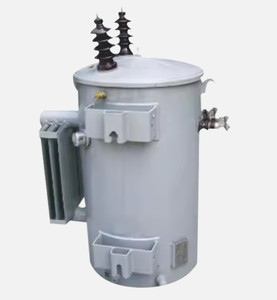
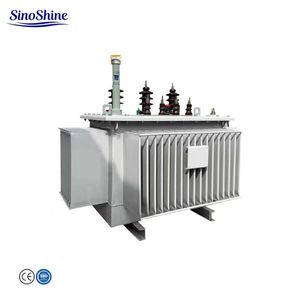
OEM/ODM Oil Immersed Transformer Factories & Factory Solutions

Global Manufacturing Partner for IEC 60076 & IEEE C57 Compliant Distribution & Power Transformers (10kVA to 5000kVA)

25+
Years Engineering Experience
5,500 m²
Factory Floor Area
5000 kVA
Maximum Capacity Rating
100%
Computerized Routine Tested
Precision Manufacturing Selection

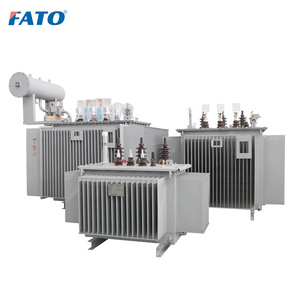
High-Efficiency OEM/ODM Oil Immersed Transformers

Engineered with electrolytic copper conductors, cold-rolled grain-oriented silicon steel (CRGO), and automated vacuum pressure impregnation (VPI) / oil filling.
Technical Architecture & Topology

Engineering Principles of Modern Oil Immersed Transformers

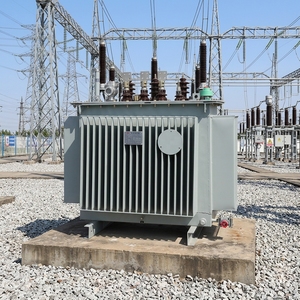
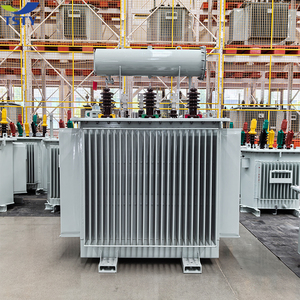
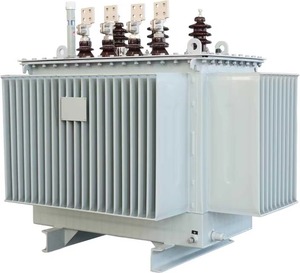
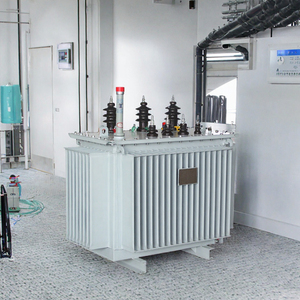
In modern high-capacity electrical distribution grids, the oil-immersed transformer remains the primary device for medium-to-high voltage conversion. Liquid-immersed designs rely on dielectric fluid for insulation and convection heat transfer. The core and winding assembly is fully submerged inside an engineered steel tank filled with mineral insulating oil (or biodegradable ester synthetic fluid), offering effective dielectric strength and thermal dissipation compared to dry-type counterparts operating in severe outdoor environments.

Key Engineering Fact: Under identical load cycles and ambient operating temperatures (+40°C to +50°C), a hermetically sealed oil-immersed transformer delivers 28% to 35% higher thermal dissipation velocity than naturally cooled cast-resin dry transformers, maintaining winding hotspot temperatures safely below critical insulation aging thresholds (IEC 60076-7).

Advanced OEM/ODM manufacturing protocols prioritize the electromagnetic configuration of the core. Utilizing high-permeability, laser-scribed, cold-rolled grain-oriented (CRGO) magnetic silicon steel sheets (such as Grade 23ZDMH95 or 27ZH100) stacked with 45-degree full-miter step-lap joints minimizes magnetic flux distortion at corner nodes. This engineering configuration decreases no-load excitation losses by up to 30% and reduces acoustic operational noise below 48 dB(A), complying with European EcoDesign Directive EU 548/2014 and Tier 2 energy efficiency standards.

Dielectric Stability

Processed under ultra-high vacuum drying chambers, maintaining moisture content below 10 ppm and breakdown voltage exceeding 60 kV for sustained insulation endurance.

Hermetic Sealing

Corrugated radiator tank wall expansion and contraction accommodates oil volume variances without external atmospheric gas ingress, eliminating oil oxidation and regular silica gel desiccant maintenance.

Short-Circuit Withstand

Circular concentric coil winding structures with high-density densified pressboard spacers provide radial and axial mechanical rigidity during severe network fault transients.

Market Intelligence & Sourcing Evolution

Future Procurement Trends for Liquid-Immersed Magnetics

Global electrical supply chains are transitioning through modernization driven by grid decarbonization, renewable energy integration, and AI-driven data center expansion. Industrial buyers, EPC contractors, and OEM plant managers must align procurement strategies with emerging structural trends:

Strategic Trend Traditional Procurement Approach Next-Generation OEM/ODM Specification Procurement Impact
Bio-Degradable Ester Fluids Standard Naphthenic Mineral Oil (Class I) Synthetic or Natural Esters (FR3 / K-Class) with fire point >300°C Lower civil fire containment wall requirements; zero ground-water hazard.
Amorphous Metal Alloy Cores Conventional Silicon CRGO Steel Fe-Si-B amorphous alloy ribbon providing 60-70% lower core losses Reduces total ownership cost (TCO) in low-utilization renewable networks.
Embedded IoT Sensor Arrays Analog liquid gauges and periodic manual oil tests Fiber-optic winding temperature probes + digital DGA (Dissolved Gas) transceivers Predictive maintenance capabilities integrated into SCADA/Smart Grid platforms.
Low Carbon Supply Chain Traceability Untracked raw metal origins Recycled green copper rod and certified low-embodied-carbon tank fabrication Essential for meeting EU CSRD and corporate carbon reduction targets.

For international supply contracts, procuring through verified factories with scalable OEM/ODM engineering capabilities ensures custom vector configurations (Dyn11, Ynd11, Yzn11), bi-directional step-up photovoltaic duties, and offshore C5-M marine-grade corrosion finishes are delivered without prolonged prototype approval cycles.

Verified Manufacturing Strength

Enterprise Heritage & In-House Testing Infrastructure

With an operational legacy dating back to 1990 via our parent enterprise in industrial automation, process computing, and SCADA-integrated medium voltage installations, our manufacturing operations deliver structural engineering depth. Spanning a specialized 5,500 m² state-of-the-art facility, our processes integrate core shearing, precision foil winding, automated submerged tank welding, vacuum drying, and computerized routine test bays under a single roof.

Computerized Routine Testing Panel: Automated data collection for voltage ratio, vector relationship, and phase displacement.
Open-Circuit & Short-Circuit Test Station: Computerized determination of no-load loss, load loss, and impedance voltage percentage.
Double Voltage Double Frequency (DVDF): High-frequency motor-generator set verification for inter-turn and inter-layer insulation integrity.
Precision Winding Resistance & LCR Testing: Multi-channel micro-ohmmeter verification down to 0.1 µΩ across all tap changer settings.
Infrared Thermal Profile Measurement: Calibrated dynamic thermographic analysis confirming temperature rise limits under full-load runs.
High-Voltage Dielectric Testing: Power-frequency withstand voltage validation up to 75 kV rms and Lightning Impulse (BIL) compliance.
Procurement Guidelines

Frequently Asked Questions on Oil-Immersed Transformer Sourcing

Direct technical answers to assist project directors, electrical consultants, and industrial procurement departments.

What technical parameters are required to issue an OEM/ODM transformer quotation?
To receive an accurate engineering calculation and commercial offer, submit: rated capacity (kVA/MVA), primary rated voltage (kV) with tapping range (e.g., ±2×2.5% NLTC/OLTC), secondary output voltage (kV or V), operating frequency (50Hz or 60Hz), vector group connection (e.g., Dyn11), short-circuit impedance percentage (Uk%), cooling method (ONAN/ONAF), conductor metallurgy (electrolytic copper or aluminum), environmental ambient limits, and mandatory standards (IEC 60076, IEEE C57, or ANSI).
What is the functional difference between S11, S13, and Amorphous Metal alloy transformers?
The naming conventions designate design generations classified by core loss reduction. S11 series utilizes conventional cold-rolled grain-oriented silicon steel with step-lap joints. S13 configurations feature higher-grade magnetic steel and refined stacking geometry, reducing no-load core losses by an additional 25% over S11. Amorphous metal core units utilize non-crystalline iron alloys, eliminating crystalline magnetic domain drag and reducing no-load losses by roughly 60% to 70% compared to S11, providing maximum operational efficiency in solar and light-load distribution scenarios.
How does hermetically sealed design prevent transformer oil degradation?
In a hermetically sealed distribution transformer, the tank is vacuum-filled with no internal air or gas cushion (or in some configurations, pressurized with dry nitrogen). Thermal volume fluctuations of the insulating oil during load cycles are absorbed by the elastic deflection of corrugated radiator tank fins. Because the dielectric fluid never comes into contact with atmospheric moisture and oxygen, oil oxidation and sludging are minimized, retaining dielectric breakdown strength and eliminating the need for periodic desiccant breather replacements.
Are routine and type test certificates provided before equipment export?
Yes. Every transformer manufactured undergoes 100% computerized routine testing prior to factory departure, including winding resistance measurement, voltage transformation ratio, phase displacement check, separate-source AC withstand test, induced overvoltage withstand test (DVDF), and open/short-circuit loss measurements. Full FAT (Factory Acceptance Testing) witness procedures by third-party agencies (SGS, Bureau Veritas, TÜV) and formal type-test reports (temperature rise, lightning impulse, short-circuit withstand) can be coordinated upon request.
What are the lead times for custom OEM/ODM industrial manufacturing contracts?
Standard distribution capacities (up to 500kVA with standard primary voltages of 11kV or 33kV) are routinely completed within 3 to 4 weeks. Custom high-capacity power transformers or engineered OEM variants requiring non-standard impedances, dual secondary configurations, or specialized enclosures typically require 5 to 7 weeks from final technical drawing approval, inclusive of full factory computerized routine testing.

Need Custom Transformer Engineering Specifications?

Consult with our magnetic design engineering team to receive complete GA drawings, loss evaluations, and competitive OEM/ODM manufacturing pricing.

Get a Quote