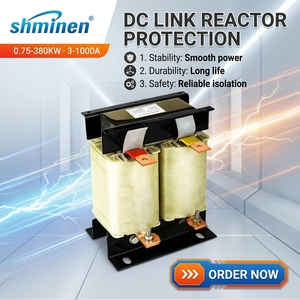
DC Arc / Rectification
 CEMarked
Engineered for harsh furnace duties, short-circuit withstand withstandability, and severe thermal and harmonic loading.
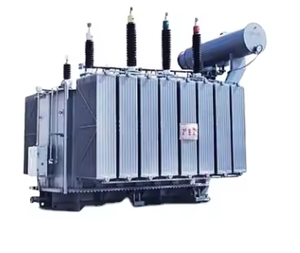
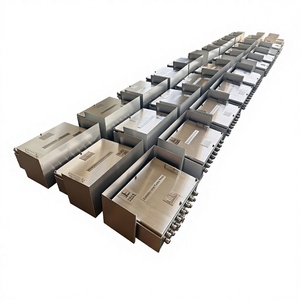
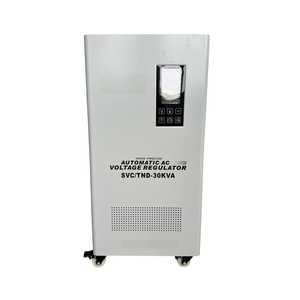
Why standard distribution magnetics fail in furnace environments and how our custom designs guarantee continuous uptime.
Unlike conventional transmission and distribution equipment operating under smooth sinusoidal steady-state loads, a Furnace Transformer (serving Electric Arc Furnaces, Submerged Arc Furnaces, Ladle Refining Furnaces, and Induction Melters) operates in an environment characterized by extreme cyclical stress. During the initial melt-down phase of scrap charging, intermittent short-circuits occur continuously inside the furnace vessel. The transformer secondary is subjected to severe current surges exceeding rated current by 3.5 to 5.0 times, causing intense electrodynamic repulsion forces across the coil geometry.
As an authoritative OEM/ODM manufacturer, we engineer furnace units to withstand mechanical stress by utilizing continuous disc winding configurations reinforced by densified laminated wood pressure rings and high-yield radial spacers. Dynamic short-circuit stresses are mitigated by pre-stressing winding assemblies beyond the peak theoretical electromagnetic forces calculated via Finite Element Analysis (FEA).
Furnace processes demand colossal current densities at low terminal voltages (e.g., 40kA to 120kA at 80V to 1,200V). Our secondary delta closures are executed directly within the transformer tank or via coplanar water-cooled copper bus tubes.
Non-linear arc plasma and heavy thyristor/IGBT rectifiers generate massive harmonic distortion (predominantly 3rd, 5th, 7th, and interharmonics). We integrate custom core design parameters to keep eddy losses low.
Arc length and furnace metallurgy require real-time voltage variation under full smelting currents. We equip units with robust, high-speed vacuum OLTC systems capable of over 300,000 operations between overhauls.
Key technological, environmental, and digital shifts steering procurement decisions across global smelting enterprises.
Global foundries and urban steel works are actively eliminating conventional mineral oils in favor of synthetic and natural ester dielectric liquids (e.g., FR3, MIDEL). Esters raise flash points from 160°C to over 300°C, providing K-class fire safety and eliminating water catchment containment needs.
Modern steel plants are modernizing from AC arc to DC arc smelting to curtail electrode consumption by up to 40% and suppress grid flicker. This drives procurement demand for specialized multi-pulse (12-pulse, 24-pulse) rectifier transformers with balanced phase displacement windings.
Modern EPCs require real-time asset visibility. We embed Gallium-Arsenide fiber optic thermal sensors directly inside the high-current secondary winding hot spots, transmitting dynamic thermal profiles to SCADA and plant DCS platforms to avert thermal degradation.
Procurement directors are shifting from lowest-bidder evaluations to 30-year capitalized loss assessments. By decreasing no-load losses with Step-Lap mitered core joints and minimizing load losses via transposed OFHC copper conductors, our furnace transformers deliver millions of kilowatt-hours in energy savings across operational lifecycles.
| Furnace Type | MVA Rating Range | Secondary Voltage / Current Profile | Critical Engineering Focus Area |
|---|---|---|---|
| EAF (Electric Arc Furnace) | 10 MVA – 160 MVA | 150V – 1,200V / 20kA – 140kA per phase | Withstanding mechanical scrap cave-in shock, vacuum OLTC duty, series reactor integration. |
| SAF (Submerged Arc Furnace) | 5 MVA – 80 MVA | 80V – 350V / High continuous currents (up to 160kA) | Sustained duty factor, delta closure geometry, ferroalloy slag resistance, harmonic endurance. |
| LF (Ladle Refining Furnace) | 5 MVA – 40 MVA | 180V – 450V / Stable arc heating duty | Frequent tap-changing under load, accurate metallurgical thermal profile control, compact footprint. |
| Induction Melting Systems | 500 kVA – 25 MVA | Medium voltage to variable high frequency converter supply | Harmonic attenuation (5th, 7th, 11th, 13th), electrostatic shielding, resonance prevention. |
Combining heavy-duty mechanical engineering, advanced automation heritage, and stringent export certifications.
One of the largest consolidated plants in the industrial hub of Santej, Ahmedabad. Complete fabrication, core slitting, coil winding, drying, and test bays operate under a unified quality management umbrella.
Backed by decades of PLC, SCADA, and hazardous-area panel design experience. We ensure every transformer communicates cleanly with plant controls, providing intuitive trip, alarm, and tap telemetry.
Fully compliant with IEC 60076, IEEE C57.17, and relevant CE safety directives. Engineered for turn-key export to North America, Europe, the Middle East, Southeast Asia, and South America.
Equipped with computerized OC/SC testing benches, Megger IR verification, DVDF induced overvoltage sets, digital LCR bridges, milli-ohm resistance measurement, and thermal infrared diagnostics.
Consult with our lead application engineers for complete technical evaluations, dimensional drawings, and competitive OEM/ODM project quotations.
Inquire NowDirect technical answers addressing engineering constraints, commissioning, and international logistics.