 CEMarked CEMarked
Direct OEM/ODM integration units manufactured under rigorous computerized quality inspections, matching heavy industrial switchgear and automated process infrastructure.
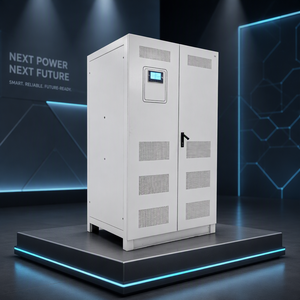
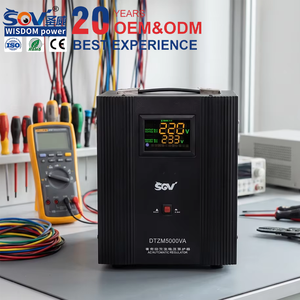
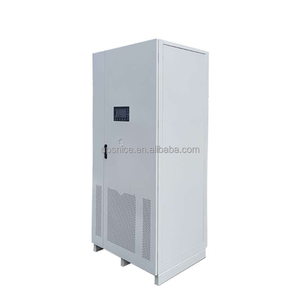
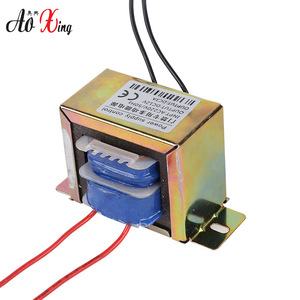
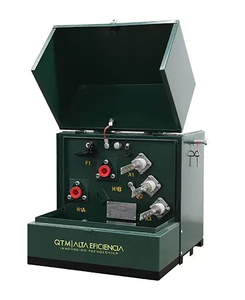
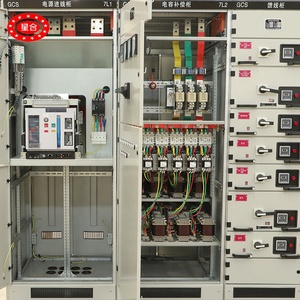
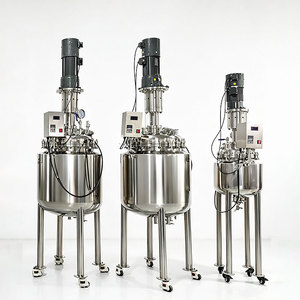
In modern industrial facilities, the electrical control cabinet is far more than a sheet-metal enclosure housing terminals; it serves as the operational epicenter of automation processes, power conversion, machine control, and personnel safety. As an international OEM/ODM manufacturing group rooted in engineering expertise since 1990 through Prima Automation (India) Pvt. Ltd. and expanded since 2006 with our specialized manufacturing facility in Santej, Ahmedabad, we bridge the gap between high-reliability switchgear integration and electromagnetic precision.
Spanning an advanced facility of over 5,500 square meters, our manufacturing ecosystem engineers everything from Low Voltage Motor Control Centers (MCC)—such as our GCK drawout switchboards—to custom programmable logic controller (PLC) cabinets, SCADA networks, and hazardous-area certified systems (explosion-proof, pressurized, and intrinsically safe architectures). By seamlessly pairing control electronics with in-house produced dry-type and cast resin transformers (ranging from 50VA to 5000kVA), line/load reactors up to 2500A, and active harmonic mitigators up to 500HP, we eliminate electromagnetic interference (EMI), resolve severe inrush voltage dips, and optimize power factor across mission-critical sites worldwide.
Flameproof, pressurized (Ex-p), and intrinsically safe control enclosures optimized for Zone 1 and Zone 2 refineries, chemical processing, and offshore extraction platforms.
Co-engineered line and load reactors suppressing voltage spikes across long motor leads, preserving IGBT integrity in Variable Frequency Drives up to 2500A.
High fault withstand structures featuring multi-compartment separation, rapid replacement drawout cassettes, and IEC 61439 Form 3b/4b isolation for uninterrupted maintenance.
Engineering procurement teams must evaluate structural integrity, short-circuit withstand parameters, and electromagnetic decoupling. Below is an engineering benchmark outlining our build standards across varying industrial environments:
| Design Dimension | Standard Industrial Cabinet | Heavy Chemical / Marine Duty | GCK Series Drawout MCC Panel |
|---|---|---|---|
| Enclosure Material | 1.5mm - 2.0mm Cold-Rolled Carbon Steel (CRCA) | AISI 304 / 316L Stainless Steel (Pickled & Passivated) | 2.0mm - 2.5mm Electro-Galvanized Al-Zn Coated Steel |
| Ingress Protection (IP) | IP54 / IP55 (IEC 60529), NEMA 12 | IP65 / IP66 Hermetic Gasketed, NEMA 4X | IP40 / IP42 / IP54 (Compartmentalized) |
| Internal Segregation | Form 1 / Form 2a | Form 2b / Form 3a | Form 3b / Form 4a / Form 4b (Fully Isolated) |
| Short-Circuit Withstand (Icw) | 15kA - 25kA (1 sec) | 35kA - 50kA (1 sec) | 50kA - 80kA (1 sec) Dynamic Stability |
| Busbar Surface Treatment | Bare or Tin-Plated Electrolytic Copper | Nickel-Plated / Heat-Shrink Sleeved (Tinned) | High-Conductivity Silver/Tin Plated ETP Copper |
| Routine Test Verification | Megger & Basic Dielectric (2kV/1min) | Dielectric, Megger, Salt Spray (1000hr) | DVDF Induced Overvoltage, OC/SC, LCR & Milliohm |
Procurement directors and EPC project leads are fundamentally altering their strategic sourcing for electrical switchboards, automation panels, and magnetic components. The convergence of strict carbon reporting, supply chain resilience, and digital traceability has accelerated four macro procurement movements:
1. Decarbonization and Life-Cycle Carbon Accounting: Global export destinations, especially across the EU and North America, are actively enforcing cradle-to-gate carbon metrics under the Corporate Sustainability Due Diligence Directive (CSDDD) and CBAM. Industrial buyers no longer evaluate initial bid price in isolation; instead, Total Cost of Ownership (TCO) calculations directly weigh no-load copper core losses, eco-design compliant resins, and recyclable enclosure packaging.
2. Consolidation from Component Aggregators to Integrated OEMs: Procurement friction frequently emerges when switchboard builders blame external transformer manufacturers for inductive coil overheating, or when VFD integrators encounter unpredicted nuisance tripping caused by incompatible input reactors. International procurement departments now consolidate supply chains by selecting Tier-1 factories capable of engineering the control logic, sheet-metal assembly, and internal magnetics within a single audited envelope.
3. Demand for Certified Digital Factory Acceptance Testing (Digital FAT): The necessity of reducing air-travel overhead and expediting project turnaround times has popularized remote computerized FAT protocols. Utilizing synchronized testing suites, international buyers witness automated open-circuit/short-circuit diagnostics, Double Voltage Double Frequency (DVDF) insulation verification, and calibrated infrared thermographic runs via encrypted real-time data feeds before factory dispatch.
The transition toward Industry 4.0 and decentralized industrial power generation demands structural innovations within control cabinets and motor control centers. Engineering developments are centered on three pivotal technologies:
Embedded fiber-optic temperature sensors along busbar joints, continuous insulation degradation monitoring, and current signature analytics interfaced via Modbus-TCP, PROFINET, and OPC-UA edge bridges.
Integration of ultrafast optical arc detection relays that trigger circuit breakers in under 5ms, coupled with mechanical blast-deflection top flaps conforming to internal arc containment standard IEC/TR 61641.
Hybrid voltage regulation modules incorporating thyristor-based static stabilizers without moving servo brushes, yielding millisecond-level response times for precision CNC and semiconductor loads.
Sourcing directly from our specialized manufacturing base ensures precision engineering derived from decades of plant experience and industrial automation leadership:
Decades of Automation Heritage: Backed by Prima Automation's establishment in 1990 and reinforced by our specialized transformer facility founded in 2006, our engineers approach cabinet fabrication from the perspective of field operators. We anticipate wire routing bottlenecks, thermal hot-spots, and dynamic fault stressors before metal is bent or copper is wound.
Unmatched In-House Metrology & Quality Equipment: Our 5,500 m² plant in Santej, Ahmedabad, maintains comprehensive in-house computerized inspection rigs. Every project undergoes routine testing that includes:
Double Voltage Double Frequency testing verifies turn-to-turn and layer insulation under severe simulated network stress.
Precision LCR meters verify inductance profiles; 25V AC/DC milli-ohm bridges measure phase resistance balance to decimal tolerances.
Under calibrated full-load simulation, high-resolution IR diagnostics ensure enclosures and coils operate well within Class F/H thermal limits.
This stringent testing matrix—alongside automated single/three-phase open-circuit and short-circuit testing panels, insulation resistance testers (Megger), and dedicated current transformer test stations—guarantees full CE mark compliance and flawless commissioning upon arrival at your project site.
Comprehensive technical responses addressing design specifications, international export logistics, and compliance standards.