
35+
Years Automation Heritage (Since 1990)
5,500 m²
Standardized Production Plant
5000 kVA
Maximum Integrated Capacity
< 100 ms
Dynamic Phase Matching Accuracy
Integrated Paralleling Switchgear & Critical Power Equipment
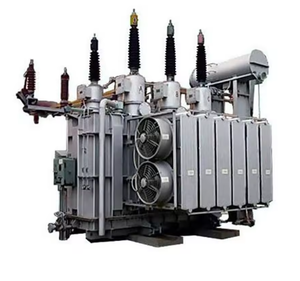
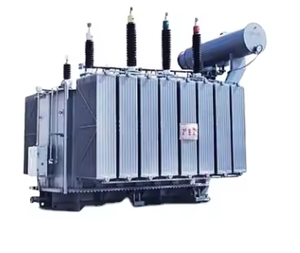
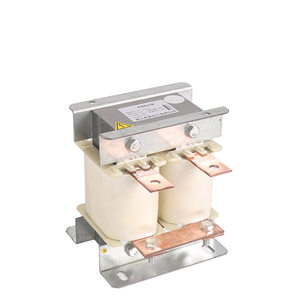
Precision-matched balance-of-plant components, step-up/down isolation systems, and harmonic containment reactors manufactured under rigid ISO and CE compliance standards.
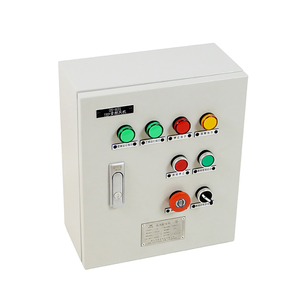
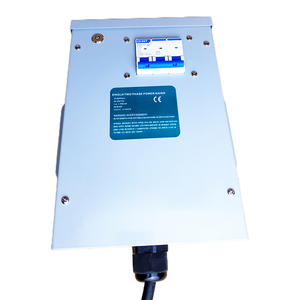
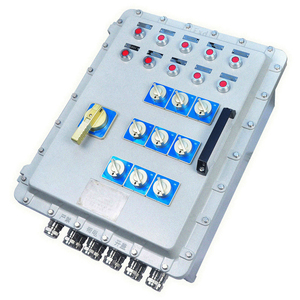
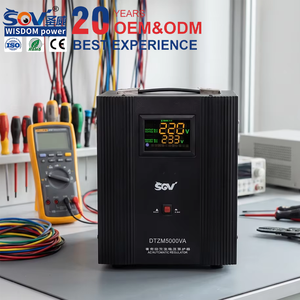
Technical Whitepaper: Engineering Custom OEM Synchronizing Control Panels
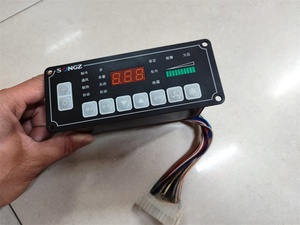
In distributed energy resource architectures, microgrids, and mission-critical backup power infrastructures, the synchronizing control panel (SCP) acts as the operational nerve center. Operating at the confluence of multi-source power generation, prime power generation, and utility tie interfaces, synchronizing switchgear facilitates the seamless paralleling of dissimilar power supplies. A synchronized system orchestrates frequency, voltage magnitude, phase angle sequence, and waveform cohesion to achieve bumpless load sharing, soft ramping, peak shaving, and automatic black-start load restoration without grid disturbance.
1. Mathematical Synchronism & Paralleling Physics
Paralleling two alternating current (AC) sources requires strict boundary adherence to the classical condition parameters known as the paralleling envelope:
- Phase Angle Difference (Δθ): Optimized within < ±5° electrical. Excessive angular mismatch imposes massive electromagnetic shear on the generator rotor shaft and generates sub-transient current spikes exceeding 10 to 12 times full load current (FLC).
- Voltage Magnitude Deviation (ΔV): Regulated within ±1.5% to ±2.5% of nominal bus voltage to prevent uncontrolled circulating reactive currents ($Q_{circ} = \frac{V_1 - V_2}{X_{d}''}$) which overheat alternator windings.
- Slip Frequency Differential (Δf): Maintained between 0.05 Hz and 0.25 Hz. Operating slightly hyper-synchronous ensures the inbound unit immediately accepts active power (kW) rather than falling into a reverse-power trip condition upon circuit breaker closure.
| Functional Parameter | Utility-to-Genset Tie (Grid Parallel) | Islanded Multi-Gen Bus (N+1 Isochronous) | Marine / Offshore Propulsion Tie |
|---|---|---|---|
| Permissible Phase Angle (Δθ) | ± 3° to ± 5° | ± 5° to ± 10° | ± 5° (Shock-rated damping) |
| Permissible Voltage Margin (ΔV) | ± 1.0% – 2.0% | ± 2.5% | ± 1.5% |
| Load Sharing Topology | Base-Load kW / VAr Export Droop | Isochronous Active Load Sharing Line | Dynamic Power Management System (PMS) |
| Breaker Closure Time | Spring Charge < 50 ms (Fast Close) | Motorized ACB / VCB < 80 ms | Vacuum / Air Breaker < 60 ms |
| Governing Standard | IEEE 1547 / UL 1558 / IEC 61439 | IEC 60947 / ISO 8528-5 | DNV-GL / Lloyd's / ABS Marine Rules |
2. Programmable Logic Controllers vs. Dedicated Digital Paralleling Units
Modern OEM synchronizing control boards deploy hybrid architectural models. Dedicated micro-controller-based automatic synchronizers (such as Woodward, DEIF, ComAp, or Deep Sea) manage real-time cycle-by-cycle phase synchronization and zero-crossing breaker firing commands. In tandem, high-reliability industrial PLC and SCADA automation platforms handle peripheral system interlocks, sequential priority shedding, ventilation control, fuel supply management, and motorized breaker racking interlocking.
3. Future Procurement Trends in Synchronizing Control Panels (2025–2030)
Global procurement metrics are shifting away from standalone diesel paralleling panels toward versatile energy convergence switchgear:
- BESS & Hybrid Microgrid Interfacing: Modern panels must dynamically reconcile rotational inertia from reciprocating diesel/gas engines with inverter-based synthetic inertia generated by Battery Energy Storage Systems (BESS) and utility-scale PV assets.
- Open Communication Stacks (IEC 61850 & Modbus TCP): Legacy analog analog droop lines (±3V DC lines) are being comprehensively phased out in favor of deterministic industrial Ethernet networks and peer-to-peer GOOSE messaging for sub-millisecond fault isolation.
- Substation Form-4b Arc-Resistant Partitioning: International specifications mandate stringent physical segregation between busbars, functional synchronizing logic, and cable terminations, mitigating catastrophic arc-flash propagation in data centers and industrial plants.
Advanced Technological Frontiers in Synchronization Switchgear
Next-generation technological developments addressing distributed energy orchestration, harmonic mitigation, and extreme hazardous ambient integration.
Dynamic Vector Shift & df/dt (ROCOF)
Integration of intelligent anti-islanding relays capable of analyzing Rate of Change of Frequency (ROCOF) and dynamic vector shifts within 40 milliseconds, securing utility interconnect integrity against unintended out-of-phase reclosure events.
Integrated Active Harmonic Scrubbing
Heavy non-linear industrial loads distort source sinusoidal profiles. Modern synchronizing suites integrate active harmonic mitigation systems, power factor correction, and line reactors up to 2500A to maintain Total Harmonic Distortion (THD) below 3% under partial loading.
Hazardous Area & Ruggedized Marine Topology
Certified ATEX, Exd, and pressurized cabinet configurations ensure reliable multi-generator synchronization in offshore drilling rigs, chemical processing complexes, and mine extraction shafts vulnerable to explosive atmospheres and salt spray corrosivity.
Factory Direct Manufacturing & Global Export Infrastructure
Founded on extensive automation and magnetics engineering foundations since 1990, our manufacturing facility in Santej, Ahmedabad, encompasses over 5,500 m² of specialized production floor space. We integrate custom sheet metal fabrication, winding, automated computerized testing, and switchgear assembly under one unified engineering framework.
35+ Years Automation Heritage
Backed by decades of PLC, SCADA, and hazardous-area panel design expertise for heavy industrial leaders such as Siemens, Tata, Jindal, Adani, and ONGC.
Computerized Testing Facility
Every synchronizing assembly and transformer undergoes full open/short-circuit validation, DVDF induced overvoltage checks, and automated phase sequence verification.
50VA to 5000kVA Scale
Complete magnetic matching capability from low-voltage instrument control transformers up to medium-voltage power transformers and heavy-duty reactor banks.
Full Compliance Export Packaging
CE-marked, UL-standard compliant assemblies equipped with tropicalized finishes, anti-vibration mountings, and seaworthy export fumigation packing.
Synchronizing Control Panel Procurement FAQ
Direct technical responses addressing common engineering evaluation, sizing, compliance, and international logistics criteria.
What parameters must be specified when commissioning a custom OEM synchronizing panel?
Procurement teams should specify the number of generating assets, alternator rated capacity (kVA/kW), operational voltages (e.g., 415V, 3.3kV, 11kV), frequency (50/60 Hz), neutral earthing scheme (solid, ungrounded, or NGR), motorized circuit breaker model (ACB/VCB with shunt trip and close coils), governor interface type (electronic potentiometer, PWM, or analog ±3V/±10V), Automatic Voltage Regulator (AVR) auxiliary input requirements, and communication protocols (Modbus RTU, Modbus TCP, Profinet, or IEC 61850).
What is the difference between Isochronous and Droop load sharing?
In Droop Mode, system frequency decreases linearly as the electrical load increases (typically 2% to 4% droop). This allows generators to operate in parallel with utility grids or other sets without communication lines, though frequency varies with system demand. In Isochronous Mode, paralleled generator controllers communicate continuously via an active load-sharing bus, maintaining constant nominal frequency (50 Hz or 60 Hz) regardless of aggregate plant load fluctuations.
How does the synchronizing control panel handle reverse power conditions?
If a prime mover fails or drops fuel pressure during paralleled operation, the alternator transitions into a synchronous motor, drawing active power from the common busbar. Custom synchronizing boards utilize ANSI 32R (Reverse Power Protection) relays set typically between 3% and 10% of rated generator capacity with a directional time delay (1 to 5 seconds). Upon tripping, the panel opens the respective motorized circuit breaker to protect the engine mechanics from catastrophic reverse motoring torque.
Are panels factory-tested under load simulation before global dispatch?
Yes. Prior to export container loading, synchronizing suites undergo rigorous factory acceptance testing (FAT) inside our computerized test facility. Testing protocols include simulated multi-channel primary injection, sync-check relay verification, double-voltage double-frequency (DVDF) insulation withstand tests, millivolt contact drop tests on power busbars, and full primary scheme simulation via digital injection sets.
Can synchronizing panels be built into ATEX / IECEx explosion-proof enclosures?
Yes. Leveraging our parent company's experience in hazardous-area design since 1990, we construct Exd flameproof, Exp pressurized, and intrinsically safe (Exi) synchronizing and distribution suites engineered specifically for petrochemical processing plants, FPSO vessels, and oil refineries where hydrocarbon gases (Zones 1 & 2) are present.
Design Your Custom Paralleling & Distribution Architecture
Collaborate directly with our senior switchgear design engineers to configure custom OEM synchronizing panels, power transformers, and power quality solutions tailored precisely to your project's single-line diagram.