 CEMarked CEMarked
Browse our certified range of direct-replacement DC link reactors, custom variable frequency drive (VFD) inductors, and specialized thermal management chokes ready for rapid OEM batch manufacturing.
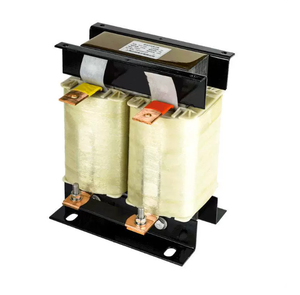
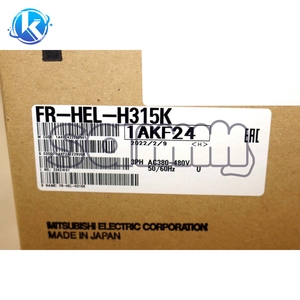
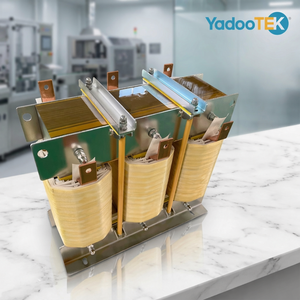
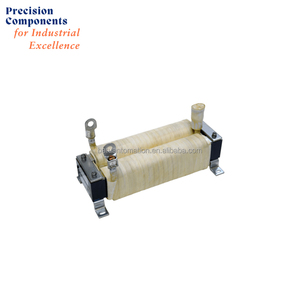
Understanding why leading power engineering OEMs specify DC link inductors over AC line reactors for compact footprint, high harmonic filtering, and capacitor protection.
In variable frequency drive (VFD) architecture, uninterruptible power systems (UPS), and solar central inverters, the intermediate direct-current link is vulnerable to severe AC ripple currents, voltage surges, and utility-side disturbances. A DC link choke (also known as a DC reactor or intermediate link inductor) is positioned between the input rectifier bridge and the bulk DC bus electrolytic/film capacitor bank. By opposing instantaneous fluctuations in direct current, the choke effectively continuous the conduction angle of the bridge diodes, dampening destructive peak charging pulses and suppressing current harmonics directly at the DC stage.
Reduces Total Harmonic Distortion of Current (THDi) typically down to 30%–38% without external tuned filters, enabling compliance with stringent IEEE 519 and IEC 61000-3-12 grid injection standards.
Filters high-frequency RMS ripple currents that generate excessive internal Joule heating ($I^2R$) in DC bus capacitors, quadrupling intermediate filter capacitor operating lifespans.
Absorbs high-energy line voltage spikes, utility switching notches, and capacitor switching transients from entering the DC intermediate stage, eliminating nuisance drive tripping.
Carrying DC carrying current with small AC ripple, a DC choke requires substantially less active core steel and magnetic volume than a 3-phase AC line reactor of equivalent drive horsepower.
| Evaluation Parameter | Intermediate DC Link Choke | Input AC Line Reactor (3-Phase) | Engineering Selection Rule |
|---|---|---|---|
| Circuit Location | Internal DC bus between rectifier bridge & capacitor bank | AC supply lines ahead of drive input terminals | DC chokes can be integrated into custom OEM drive enclosures. |
| Physical Envelope & Mass | Compact (~40% smaller footprint, single magnetic circuit) | Bulky (requires 3 distinct wound phase legs) | Select DC Choke where panel enclosure volume is strictly constrained. |
| Harmonic Mitigation Efficiency | Reduces 5th, 7th, 11th harmonics; THDi down to 32%–38% | THDi suppressed to approximately 35%–42% (at 3%–5% impedance) | Both satisfy standard industrial grid compliance; DC choke delivers higher efficiency. |
| Voltage Drop Penalty | Negligible (Pure copper resistance only, no AC line reactance) | 1% to 5% fundamental voltage reduction across line reactors | DC Choke preserves full DC bus voltage under rated continuous motor load. |
| Direct Bus Protection | Blocks DC bus surges, smooths ripple directly into capacitor bank | Mitigates phase-to-phase shorts and lightning impulse ingress | DC chokes uniquely shield sensitive DC link components from thermal breakdown. |
Strategic supply chain dynamics shaping power electronics sourcing, nearshoring initiatives, and thermal magnetic material procurement over the next decade.
Tier-1 enterprise buyers have shifted procurement metrics from upfront BOM component costs to lifecycle energy efficiency calculations. High-grade grain-oriented silicon steel (CRGO) or amorphous cores deliver dramatic reductions in iron core losses ($W/kg$), providing multimillion-hour electrical energy savings in continuously operating petrochemical, steel, and water municipal pump drives.
Cross-border export friction demands that custom magnetic components feature dual compliance (CE marking under Low Voltage Directive 2014/35/EU, UL 508 / UL 61800-5-1 certification, and RoHS/REACH material traceability). Single-market components are being rapidly disqualified by procurement managers in favor of unified global product SKUs.
System integrators are circumventing non-technical distributors to contract directly with vertically integrated choke manufacturing facilities. Direct co-engineering enables tailored copper foil geometric aspect ratios, integrated thermistors (PT100/NTC), and customized mounting brackets calibrated for automated panel assembly lines.
How Wide Bandgap semiconductors (SiC & GaN), advanced magnetic materials, and automated vacuum impregnation are redefining DC link choke performance.
Next-generation converters operate at carrier frequencies exceeding 20 kHz to 100 kHz. Conventional silicon laminations suffer unmanageable eddy-current core heating at these frequencies. Leading reactor manufacturers now implement sendust, iron-silicon-aluminum, and nanocrystalline amorphous powder cores that maintain linear saturation characteristics while slashing AC winding eddy losses via copper foil foil geometries.
Power density imperatives in electric vehicle rapid charging stations and compact wind turbine nacelle inverters require magnetic components capable of operating at elevated core temperatures without dielectric breakdown. Modern DC chokes leverage Class H/R Nomex barrier insulation, high-temperature polyimide films, and specialized vacuum pressure impregnated (VPI) epoxy systems.
Industrial IoT control panels now demand self-monitoring magnetic sub-assemblies. Custom DC reactors are increasingly engineered with embedded dual-sensor RTDs inside the center core gap and winding hot-spots. This facilitates real-time thermal telemetry feeding PLC predictive maintenance systems, preventing unplanned factory line outages.
Combining over 25 years of specialized magnetics engineering with a 5,500 m² state-of-the-art manufacturing facility in Santej, Ahmedabad, under the lineage of industrial automation since 1990.
Operating one of the region's largest magnetic production complexes in Santej, Ahmedabad. Fully integrated with automated precision foil winding machines, multi-spindle wire winders, and dedicated assembly lines handling chokes up to 2,500A continuous current and transformers to 5,000 kVA.
Every DC choke undergoes strict quality verification prior to packaging. Our comprehensive test facility includes automated computerized panels, digital LCR inductance meters, Double Voltage Double Frequency (DVDF) testing, Megger insulation resistance testing, and infrared thermographic temperature rise verification.
Dedicated to manufacturing international-standard products carrying full CE marking for global procurement teams across Europe, North America, the Middle East, and Southeast Asia. Built with flame-retardant materials proven in mission-critical steel, cement, mining, and offshore energy plants.
Accurate inductance ($L$), impedance ($Z$), and Q-factor testing across rated operating frequencies (50Hz to 10kHz).
High-precision milli-ohm resistance measurement (25V AC/DC) guaranteeing phase balance and copper conduction efficiency.
Double Voltage Double Frequency testing stress-testing inter-turn enamel insulation against steep surge impulses.
Calibrated thermal-imaging mapping during full continuous load runs to pinpoint and eliminate core hotspot anomalies.
Direct answers to the most common engineering, customization, and lead-time questions encountered when procuring OEM DC link chokes.