Santej, Ahmedabad, Gujarat, India CE-Marked Transformers for Export
Serving OEMs & Projects Worldwide

China Wholesale Precision Voltage Regulator Supplier & Suppliers

Global Industrial Power Control Solutions: High-Precision Automatic Voltage Regulators, Static Stabilizers, Dry-Type Transformers, and Advanced Distribution Modules.

Precision Power Quality & Electrical Distribution Equipment

Engineered for critical industrial systems, automated fabrication lines, medical facilities, and harsh operating environments requiring uninterrupted voltage compliance and galvanic stability.

Smart WiFi Mini Split AC Thermostat Controller
Flexible PVC Mini Split Panel 12Vac Thermostat Smart AC Controller WiFi IR Schools Hospitals Rectangular HVAC Systems Parts CE
Technical Details
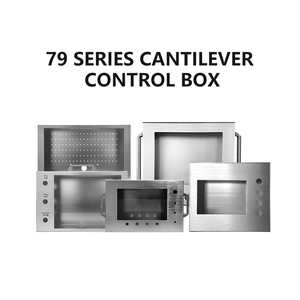
CNC Cantilever HMI Control Panel Enclosure
CNC Machine Cantilever Control Panel Box Aluminum Alloy Suspended HMI Operator Enclosure IP54 Adjustable Rotatable Support
Technical Details
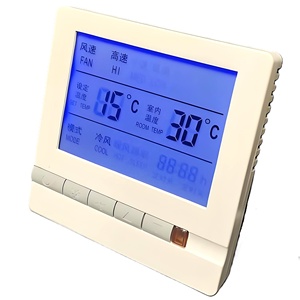
Central AC Thermostat LCD Control Panel
Central Air Conditioner Thermostat Ventilator Coil Control Panel Three-speed Switch Controller LCD Display Flexible Hospital ABS
Technical Details
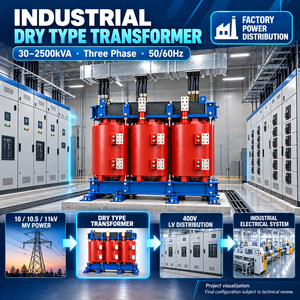
Industrial Three Phase Dry Type Distribution Transformer
Industrial Dry Type Transformer With 30-2500kVA 10kV 11kV 400V Three Phase Factory Distribution Power 50Hz Step Up Transformer
Technical Details
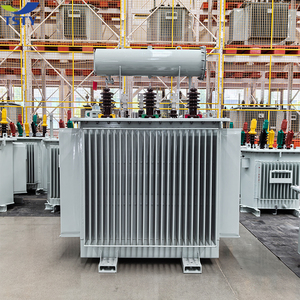
Three Phase Oil Immersed Distribution Transformer
High Quality Oil Transformer 10kv 20kv Three-phase Oil Immersed Distribution Transformer for Grid Infrastructure
Technical Details
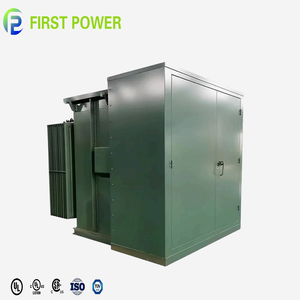
IEEE Standard Pad Mounted Power Distribution Transformer
IEEE Standard 50/60HZ 10KV 20KV 35KV 3 Phase Pad Mounted 1100KVA Transformer For Electric Power Distribution
Technical Details
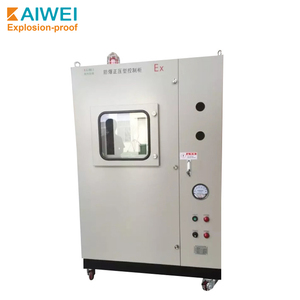
Standard Exd Explosion Proof Electrical Cabinets
Explosion Proof Enclosure Box Station Panels Electrical Enclosures Top Standard Exd Explosion-proof Cabinets
Technical Details
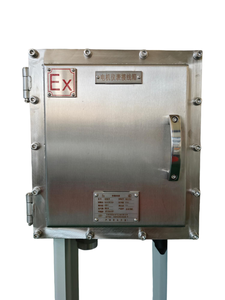
ATEX IECEx Explosion Proof Junction Box
IECEx ATEX Certified Explosion Proof Junction Box SS304 Ex D IIB T4 Gb IP66 Electrical Power Distribution Enclosure
Technical Details
25+
Years Engineering Expertise
5,500 m²
Modern Manufacturing Base
5000 kVA
Max Capacity Engineering
±0.5%
Precision Regulation Accuracy

Engineering Authority & System Integration Advantages

Rooted in comprehensive industrial automation backgrounds dating back to 1990, our precision voltage regulation and transformer designs meet rigorous global standards.

High-Precision Regulation Core

Our static voltage regulators and servo-driven stabilizers implement DSP-controlled tap switching and SCR technology without physical brush wear, achieving zero moving parts, instantaneous response times under 20ms, and steady output regulation down to ±0.5% to ±1%.

Industrial Automation DNA

Evolving from complex PC, PLC, and SCADA-based control panels since 1990, our engineering team evaluates electrical design through a complete system integration lens. We deliver full inrush handling, clean terminal layouts, and integrated protection against short circuits, overloads, and phase errors.

Stringent Computerized Testing

Every industrial dry-type transformer, line reactor, and static stabilizer undergoes end-to-end multi-stage inspection. Our QA infrastructure includes computerized open-circuit/short-circuit test panels, insulation resistance testers, and Double Voltage Double Frequency (DVDF) induced overvoltage validation.

International Certification Matrix

For international projects, supply reliability requires compliance verification. Our products carry CE marking, conform to relevant IEC, IEEE, and ANSI engineering standards, and support specialized hazardous-environment implementations through certified ATEX and IECEx explosion-proof configurations.

  • CE Marked standard power magnetic devices
  • Ex d IIB T4 Gb hazardous location approvals
  • IP54 to IP66 ratings for demanding environments
  • Full insulation class H and F temperature designs

Comprehensive Magnetics Portfolio

Beyond voltage stabilizers, our production covers control transformers from 50VA to 5000kVA, line and load reactors rated to 2500A, and sine wave/harmonic reduction systems up to 500HP. We offer engineering solutions for step-up, step-down, and isolation requirements across mining, petrochemical, and manufacturing lines.

  • Cast resin dry-type safety transformers
  • Oil-immersed power transformers up to 35kV
  • Load reactors for dynamic VFD output protection
  • Custom enclosure options: Stainless, Painted CRS, Aluminum

Precision Voltage Regulator Architecture & Selection Criteria

Procuring precision voltage stabilization equipment requires aligning grid stability requirements, mechanical footprint parameters, and system duty cycles.

Technology Comparison: Servo Electromechanical vs. Static Electronic Regulators

Industrial facility procurement teams face structural trade-offs between traditional carbon-brush motor-driven servo stabilizers and solid-state static regulators. Selecting the correct topology impacts operational availability, preventative maintenance intervals, and sensitivity to load changes.

Parameter / Feature Static Electronic Voltage Stabilizer (SCR / IGBT) Servo Motor Industrial Regulator
Correction Speed Instantaneous (< 20 ms, within 1 cycle) Gradual (15V to 40V per second mechanical transit)
Voltage Precision ±0.5% to ±1.0% ±1.0% to ±2.0%
Mechanical Wear None (Solid-state electronics, zero friction items) Periodic brush replacement, carbon-dust cleaning
Inrush Handling Requires bypass dimensioning for high start currents High mechanical tolerance for instantaneous surge loads
Efficiency > 98% at nominal industrial load 96% – 98% under normal conditions
Target Application CNC Centers, SMT lines, Medical Imaging, Data Units Textile mills, broad utility substations, plant-wide sites

Procurement Trends in Global Voltage Regulation

The transition toward smart grids and variable industrial automation requires more adaptable power solutions. Key procurement trends include:

1. Wide-Band Dynamic Tolerance: Installations in regions with unstable utility connections require regulators that can manage fluctuating inputs (±20% to ±30%) while preserving reliable output within narrow bounds.

2. SCADA and IoT Protocol Integration: Industrial buyers increasingly specify native Modbus TCP/RTU or Profinet interfaces. Regulators now function as active telemetry points, tracking phase currents, voltage trends, and thermal stress in real time.

3. Harmonic Resilience and Sine Filtering: Non-linear power switching devices generate upstream distortion. Modern procurement packages routinely integrate line/load reactors alongside static regulators to limit total harmonic distortion (THD) and safeguard equipment.

Future Technology: Wide-Bandgap Semiconductors

The sector is actively transitioning toward wide-bandgap (WBG) materials, notably Silicon Carbide (SiC) and Gallium Nitride (GaN) power stages in static voltage regulation modules:

Thermal Efficiency Gains: High-switching-frequency SiC topologies reduce internal dissipation by up to 40%, cutting thermal load and enabling smaller enclosures without forced-air derating.

Modular Matrix Architectures: Modern static designs adopt hot-swappable sub-units. Parallel-redundant modules ensure maintenance teams can swap power boards without shutting down critical automated lines.

Microsecond Sub-Cycle Reaction: Digital signal processors deliver sub-cycle correction, preventing micro-drops and flicker from tripping sensitive PLCs, industrial sensors, and medical diagnostic equipment.

Frequently Asked Questions (FAQ)

Technical guidance for cross-border electrical buyers, engineers, and plant operations teams.

What core technical information is required to receive a formal quotation for precision regulators?
To receive an accurate engineering review and quotation, provide: rated capacity (kVA or MVA), input voltage nominals along with worst-case deviation range (±15%, ±20%, etc.), target output voltage and tolerance limit (±1% vs ±3%), line frequency (50Hz or 60Hz), phase topology (3-phase 3-wire or 3-phase 4-wire with isolated neutral), load profile (linear vs. non-linear VFD percentages), ambient thermal constraints, and enclosure IP rating (e.g., IP20 indoor vs. IP54/IP66 outdoor).
How does a static voltage regulator handle heavy motor startup current without tripping?
Static regulators manage inrush using conservative semiconductor sizing alongside integrated automatic electronic bypass logic. During the typical 3x to 6x inductive inrush of direct-on-line motor starts, the system monitors internal junction temperatures and thyristor peak ratings. If current exceeds continuous thresholds, the regulator briefly enables an internal SCR-based static bypass, transitioning back to active precision regulation once steady-state current settles.
What routine and type tests are conducted before shipping transformers and regulators?
Every manufactured unit undergoes routine factory testing matching IEC 60076 and related standards. This includes: winding resistance measurement via precision milli-ohm bridge, open-circuit loss and no-load current checks, short-circuit impedance and load loss verification, separate-source AC withstand voltage isolation testing, Double Voltage Double Frequency (DVDF) induced overvoltage validation, and insulation resistance megger testing. We supply standard factory test certificates with each export consignment.
Can your equipment be engineered for hazardous area environments (Class 1 Div 2 / ATEX Zone 1/2)?
Yes. Utilizing our automation background since 1990 in flameproof, pressurized, and intrinsically safe electrical panels, we produce systems in certified explosion-proof enclosures. We engineer distribution junction boxes, control panels, and specialized dry transformers conforming to Ex d IIB T4 Gb classifications and IP66 marine-grade ingress protection in SS304, SS316, or cast aluminum alloys.
What is the expected operating life and maintenance schedule for dry-type transformers and static stabilizers?
Static voltage stabilizers contain no mechanical moving parts or brushes, commonly providing an operational lifespan exceeding 100,000 hours with minimal preventative maintenance limited to terminal retightening, enclosure filter replacement, and fan inspections. Vacuum pressure impregnated (VPI) and cast resin dry-type transformers have a design operating life of 25 to 30 years when operated within standard insulation thermal classes (Class F or H).

Discuss Your Power Quality & Voltage Regulation Requirements

Connect directly with our senior application engineering group to review project specifications, arrange compliance documentation, or request custom equipment dimensioning.

Contact Us