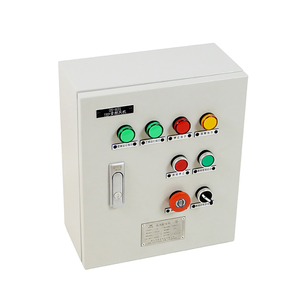
 CEMarked CEMarked
Turnkey electrical enclosures, PLC automation boxes, cantilever systems, and IPC integration built to global IEC and NEMA safety benchmarks.
A deep-dive analysis of hardware topology, thermal thresholds, and signal shielding for high-availability production environments.
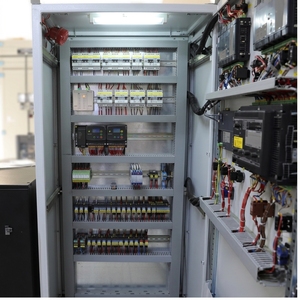
Variable frequency drives and switching rectifiers introduce substantial high-frequency common-mode noise. Our manufacturing standards mandate distinct physical segregation:
Uncontrolled internal panel temperature is the primary driver of premature PLC capacitor failure and VFD derating. Our thermal management incorporates:
Exported panels adhere to strict compliance protocols to ensure immediate on-site commissioning across jurisdictions:
Combining heavy-duty electrical engineering with advanced automation logic under one roof.
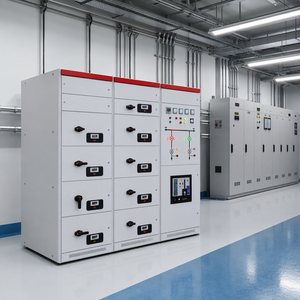
Unlike simple sheet-metal assemblers, our engineering pedigree originates from heavy magnetic systems, manufacturing transformers up to 5000kVA, line/load reactors to 2500A, and specialized harmonic filters. This enables precise internal power conditioning for sensitive PLC racks.
With engineering roots tracing back to 1990 in specialized SCADA and PLC control systems, our fabrication encompasses explosion-proof, pressurized, and intrinsically safe architectures designed for chemical processing, oil & gas, cement, and metallurgy.
Every industrial control panel undergoes exhaustive routine and functional verification: automated computerized loop tests, Double Voltage Double Frequency (DVDF) stress routines, Megger insulation testing, milli-ohm winding validation, and infrared thermal imaging.
Standardized technical parameters for mechanical, electrical, and control sub-assemblies.
| Subsystem Feature | Technical Capability Specification | Operational Impact |
|---|---|---|
| Enclosure Metallurgy | Cold-rolled carbon steel (SPCC), 304/316L Stainless Steel, extruded 6063 Aluminum Alloy | Resists mechanical deformation, galvanic corrosion, and harsh chemical exposure. |
| Ingress Invariant | IP54, IP55, IP65, IP66 / NEMA 1, 3R, 4, 4X, 12 compliance | Guarantees complete exclusion of particulate dust, continuous washdown sprays, and corrosive oil mists. |
| Processing & Logic | Siemens S7-1200/1500, Allen-Bradley ControlLogix, Mitsubishi iQ-R, Beckhoff CX Series | Facilitates microsecond I/O response times, modular fieldbus expansion, and decentralized machine logic. |
| Networking Topology | Deterministic EtherCAT, PROFINET IRT, Modbus TCP/IP, Ethernet/IP, CANopen | Ensures jitter-free synchronization for multi-axis CNC interpolation and robotics. |
| Power Management | Dual-bus segmented power distribution, integrated bypass contactors, Line/Load Reactors | Shields sensitive logic chips from voltage surges, sag transients, and third-order harmonic heat. |
Key considerations reshaping industrial automation procurement budgets over the next decade.
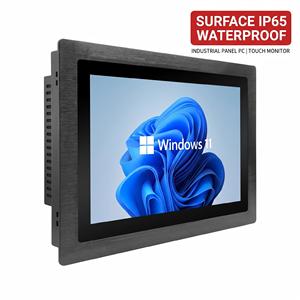
Traditional discrete PLCs are rapidly coalescing with Edge IPC controllers. Operators demand panel cabinets containing fanless, quad-core architectures capable of running containerized microservices and AI defect classification directly at the machine boundary.
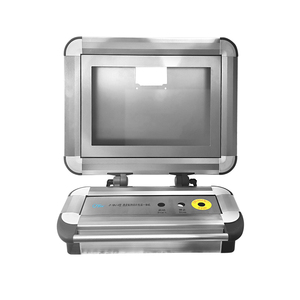
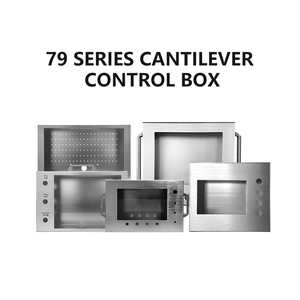
Rigid flush-mounted controls are shifting toward modular aluminum cantilever suspended enclosures. Providing 310-degree rotation and vertical gas-spring adjustment, these enclosures maximize operator safety, workflow visibility, and floor space utilization.
Forward-thinking Tier-1 manufacturers require embedded smart thermal, current, and vibration sensors along the cabinet busbar network. Real-time telemetry via MQTT or OPC UA identifies loose screw terminals and contactor pitting weeks before an unplanned stoppage.
Procurement teams are reducing wire-harness assembly hours by mandating single-cable solutions like EtherCAT P or decentralized IO-Link hubs, cutting overall panel assembly footprint by 35% and drastically reducing point-to-point field wiring faults.
Direct technical answers addressing engineering design, certification, lead times, and factory validation.
Every control box undergoes point-to-point computerized wire testing, insulation breakdown (dielectric Megger) validation, functional simulation of PLC program logic, continuous voltage drop verification, and temperature rise inspection under dynamic simulated load conditions.
Yes. Our engineering department develops dual-compliant layouts. We use UL-listed components, adhere strictly to NFPA 79 wire sizing, follow conductor color-coding standards, and maintain the necessary creepage and clearance distances across all interior busbar mounts.
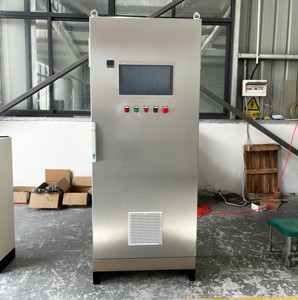
For IP54/IP65 environments where ambient air cannot enter the cabinet, we integrate closed-cycle industrial heat exchangers or thermoelectrically regulated, side-mount air conditioning units equipped with internal condensate evaporators.
All delivered panels are accompanied by complete EPLAN or AutoCAD Electrical schematics, full input/output (I/O) maps, multi-language component bill of materials (BOM), thermal distribution calculations, terminal layouts, and comprehensive routine test records.
Standard design verification and mechanical drawing approval typically take 3 to 5 business days. Fabricating sheet metal, assembling components, and completing logical FAT testing for custom enclosures typically spans 3 to 5 weeks, depending on component availability.
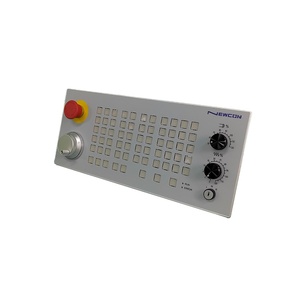
We operate precision CNC laser cutting and robotic punching equipment capable of producing customized push-button cutouts, specialized swing arms, and laser-etched stainless steel or anodized aluminum rating plates to match your industrial design guidelines.
Connect directly with our senior electrical application engineers to review your single-line diagrams (SLD), mechanical dimension constraints, and component requirements.
Inquire Now