CEMarked CEMarked
Precision-wound copper magnetics, computerized digital servo control, and high-voltage oil-immersed stabilizers customized to meet stringent international utility and industrial tolerances.
Combining heavy electrical automation engineering roots dating back to 1990 with modern CNC winding, automated vacuum pressure impregnation (VPI), and stringent CE testing protocols.
Originating from advanced PLC, PC, and SCADA-integrated control panel roots, our manufacturing ethos integrates comprehensive electrical system compatibility. We build AVRs that understand motor start transients, inrush saturation, and complex hazardous-area industrial environments.
Every stabilizer undergoes rigorous computerized evaluation prior to container dispatch: Double Voltage Double Frequency (DVDF) induced overvoltage testing, insulation resistance testing (Megger), full-load temperature rise validation, and computerized open/short circuit characterization.
Our core assemblies utilize grain-oriented silicon steel (CRGO) combined with high-grade electrolytic copper windings. Class H (180°C) insulation systems and precision vacuum pressure impregnation (VPI) guarantee low thermal rise, minimal eddy losses, and exceptional overload endurance.
Voltage stability is the foundation of industrial reliability. Fluctuations originating from unpredictable grid infrastructure, transient renewable generation (PV solar inverters and wind farms), and cycling inductive loads (large compressors, CNC spindles, induction furnaces) can severely impair sensitive components, trigger unplanned PLC reboots, and cause premature dielectric breakdown. Selecting the ideal Automatic Voltage Regulator (AVR) architecture is critical for long-term operations.
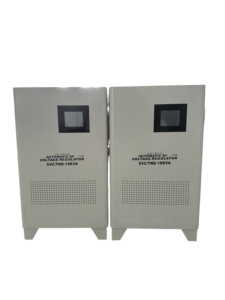
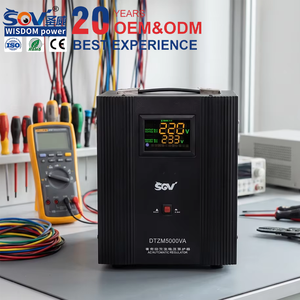
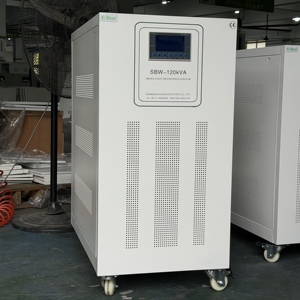
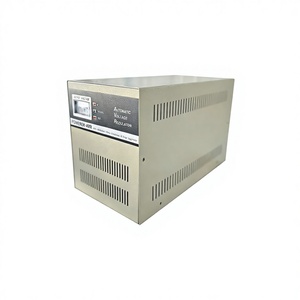
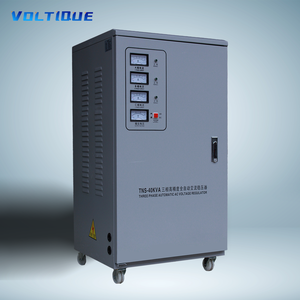
Electromechanical servo stabilizers remain the workhorse of industrial and commercial distribution. These units employ an intelligent microcontroller that continuously samples phase-to-neutral and phase-to-phase voltages. When variations exceed the set hysteresis window, a high-torque DC or AC servomotor rotates self-aligning carbon roller brushes along the exposed surface of a toroidal autotransformer or columnar variable regulator. This adjusts the input to the primary winding of a series buck-boost transformer, maintaining secondary voltage within an ultra-tight ±1% to ±1.5% tolerance.
The primary advantage of our copper-wound servo designs is their pure sinusoidal reproduction without introducing total harmonic distortion (THD). Furthermore, our compensation designs decouple the servo gear mechanisms under quiescent voltage conditions, extending mechanical brush longevity beyond 100,000 duty hours under fluctuating baseline voltages.
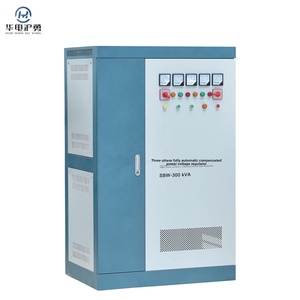
For mission-critical computing nodes, precision laser resonators, automated SMT pick-and-place lines, and medical diagnostic equipment (MRI/CT suites), mechanical response speeds are insufficient to counter rapid line sags. Static Voltage Stabilizers (SVS) replace moving parts with high-speed thyristor (SCR) tap-switching arrays or IGBT PWM buck-boost injection bridges.
By switching taps precisely at the AC zero-crossing point, solid-state regulators achieve complete correction in less than 20 milliseconds (within a single line cycle). With zero mechanical wear components, static units offer virtually maintenance-free operation and exceptional longevity in aggressive, vibration-heavy manufacturing bays.
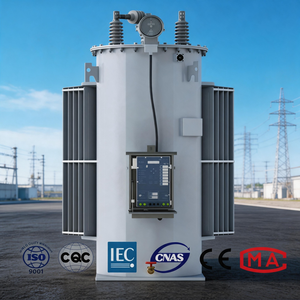
Rural distribution spurs, mining camps, and expansive utility networks often suffer from long transmission distances leading to severe line drop. Oil-immersed AVRs (rated at 11kV, 13.2kV, and 14.4kV) are engineered for exterior substations and pole installations. Operating on an automated tap-changing autotransformer configuration within a sealed mineral or ester oil tank, these rugged systems protect whole microgrid clusters from persistent under-voltage conditions.
| Performance Parameter | Servo Motor-Driven AVR | Solid-State Static (SCR) | Oil-Immersed Utility AVR |
|---|---|---|---|
| Typical Power Capacity | 1 kVA – 2,500 kVA | 5 kVA – 1,000 kVA | 50 kVA – 10,000 kVA |
| Output Voltage Precision | ±1.0% to ±1.5% | ±1.0% to ±2.0% | ±2.5% to ±5.0% |
| Correction Response Time | 20 – 40 V/sec (100–500ms) | < 20 milliseconds (<1 cycle) | 15 – 60 seconds (stepped) |
| Harmonic Distortion (THD) | Nil (< 0.1% added) | Negligible at Zero-Crossing | Nil |
| Overload Withstand Capability | 200% for 30 seconds | 150% for 10 seconds | 300% for 10 seconds |
| Efficiency at Full Load | > 98.0% | > 97.5% | > 98.5% |
How the global transition toward distributed renewable generation, electric mobility, and edge industrial IoT is redefining technical procurement criteria through 2030.
With rooftop solar installations and energy storage systems backfeeding distribution networks, conventional unidirectional voltage regulators risk hunting or over-voltage trips. Next-generation AVRs incorporate digital DSP controllers calibrated to sense reverse active and reactive power flows, stabilizing local bus voltages dynamically regardless of whether power flows upstream or downstream.
Modern industrial procurement managers increasingly demand RS485 Modbus, Ethernet IP, and wireless cloud telemetry as standard. Real-time data streams tracking brush sweep cycles, coil hotspot temperatures, load current harmonics, and transient voltage sags allow operations managers to execute predictive condition-based maintenance, virtually eliminating catastrophic downtime.
Procurement teams are shifting away from initial purchase price toward lifecycle TCO calculations. High-grade cold-rolled grain-oriented (CRGO) steel cores and 100% Class H electrolytic copper windings significantly reduce no-load excitation losses and continuous I²R load dissipation. An engineered 120kVA stabilizer operating at 98.5% versus 94% efficiency recovers its capital cost differential within 18 months of continuous service.
Direct technical answers addressing system integration, load sizing, harsh environments, and export certification standards.
An Automatic Voltage Regulator (AVR) dynamically stabilizes varying incoming grid voltages to a preconfigured setpoint (±1% to ±3%), compensating for sags, surges, and brownouts. However, standard autotransformer-based AVRs do not provide galvanic isolation between primary and secondary circuits. An isolation transformer creates an isolated magnetic barrier that mitigates common-mode electrical noise and breaks ground loops, but does not regulate voltage fluctuations unless combined with an active regulation stage. For complete industrial protection against both severe fluctuations and electrical transients, we recommend integrated Compensating Voltage Regulators with Built-In Galvanic Shielding.
Inductive AC motors draw locked-rotor inrush currents equivalent to 5 to 7 times their full-load running current upon start-up. When sizing an AVR for direct-on-line (DOL) start motors, a minimum safety multiplier of 2.5x to 3x the motor's nominal kW/kVA rating is required to prevent extreme output voltage collapse and servo hunt. If the motor is fed via a Soft Starter, a 1.5x to 2x sizing factor is adequate. When Variable Frequency Drives (VFDs) are utilized, a 1.3x rating factor is typically recommended to compensate for high input current crest factors and non-linear harmonic distortion.
Electrolytic copper features significantly lower electrical resistivity than aluminum, resulting in lower I²R thermal dissipation, higher thermal conductivity, and greater short-circuit current withstand without structural deformation. In continuous industrial environments subjected to severe cyclical overloads, copper-wound transformers exhibit superior mechanical stability and longevity. Furthermore, copper's superior contact track wear resistance minimizes carbon brush erosion across servo-driven variable autotransformers.
All export-bound automatic voltage regulators are manufactured in compliance with international standards such as IEC 60076, IEC 61558, and CE Low Voltage Directive (LVD) and EMC requirements. Routine factory acceptance tests (FAT) performed on 100% of units include: Winding Resistance Measurement, Insulation Resistance (Megger 1kV/2.5kV), Applied High-Voltage Dielectric Withstand, Double Voltage Double Frequency (DVDF) Induced Overvoltage Testing, No-Load Loss & Excitation Current Validation, Full-Load Temperature Rise, and Automated Response Time Simulation under artificially induced sags and surges.
Yes. We offer fully custom enclosure fabrications ranging from IP20 for dry, air-conditioned indoor switchrooms up to IP54 and IP55 weatherproof, dust-tight enclosures fitted with forced air heat-exchangers or closed-loop air conditioners. For saline, offshore, or chemical atmospheres, we provide C4 and C5-M industrial marine-grade epoxy coatings, stainless steel (304 or 316) enclosures, and anti-condensation heating elements controlled via integrated humidistats.
Direct wholesale factory quotations, custom OEM/ODM electrical engineering, and rapid turnaround for international EPC contracts. Connect directly with our Senior Engineering Team.