 CEMarked CEMarked
Deploying galvanic isolation, dynamic variable frequency regulation, and harsh-environment thermal control to eliminate voltage sag, harmonic transients, and component overheating.
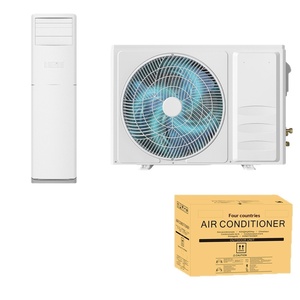
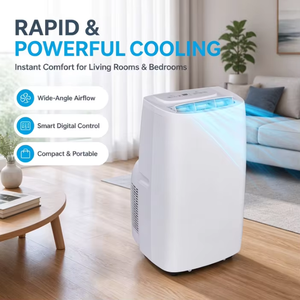
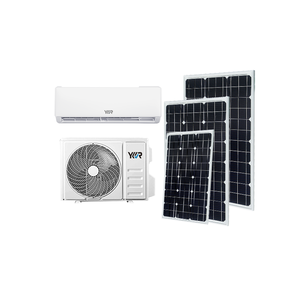
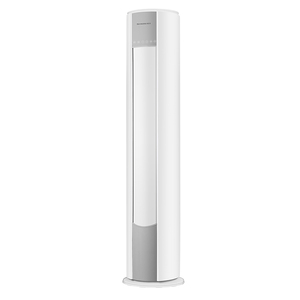
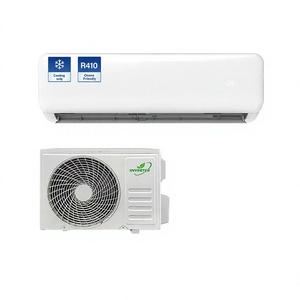
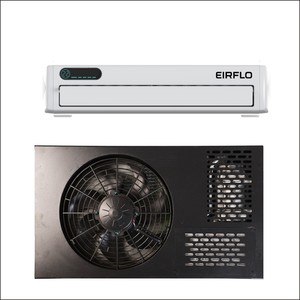
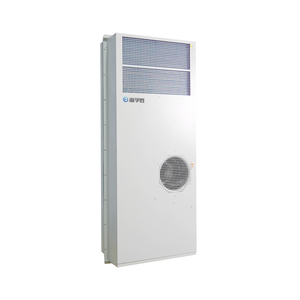
As industrial automation systems grow increasingly complex, the convergence of power stabilization and closed-loop environmental control has become paramount. With over 25 years of engineering authority established across global utility, energy, and process control projects, our manufacturing facility delivers high-yield power conditioning modules built under the most rigorous QA protocols in China.
Derived from our deep heritage as a Tier-1 supplier of PLC, SCADA, and hazardous-area flameproof control systems, we understand what causes field degradation: line harmonic resonance, excessive inrush surges, and critical thermal accumulation. Every power conditioner, static voltage stabilizer, dry-type magnetic module, and active cabinet-cooling unit is designed to meet strict international benchmarks, including CE compliance, UL harmonic dampening limits, and IEC insulation class requirements.
Every piece of equipment leaving our automated manufacturing plant undergoes an exhaustive computerized quality battery to prevent field startup failures.
Variable frequency loads introduce sharp dv/dt transients and non-linear harmonic distortion that ruin standard equipment. Our line conditioning designs mitigate risks via:
Whether mitigating tropical condensation in Southeast Asia or desert heat in the Middle East, our enclosures provide rock-solid mechanical reliability:
Procurement teams within hyperscale data centers, distributed telecom sites, and remote renewable energy storage plants are abandoning separate power conditioners and cooling devices in favor of unified, active thermal-power conditioning systems. Over the next five years, global supply chain tenders demand three fundamental technical capabilities:
1. Dual-Bus DC/AC Native Stabilization: As photovoltaic setups and industrial batteries dominate modern microgrids, static power conditioners must operate without double conversion energy penalties. Modern units seamlessly accept 48V–380V DC alongside traditional 3-phase 380V/440V AC inputs, adjusting dynamically via IGBT variable switching without phase jitter.
2. Microclimate Heat Dissipation Integration: Sensitive control hardware running AI edge inferences produces localized thermal flux. Standard panel ventilation fails in moist or dust-laden air. Global engineering contractors now mandate dedicated closed-loop compressor-based conditioners (such as IP55 cabinet air conditioning) paired directly with power supply transformers to ensure solid-state components operate below 35°C ambient thresholds.
| Evaluation Factor | Legacy Power Equipment (2015-2020) | Next-Gen Dynamic Conditioning (2025-2030) | Operational Impact |
|---|---|---|---|
| Voltage Correction Speed | Mechanical tap changers (100–200ms) | Solid-State Static Switching (<5ms) | Zero logic resets in PLCs during grid sags |
| Thermal Interface | Passive exhaust fans & louvered vents | Active Closed-Loop DC Inverter Chillers | Stops moisture ingress, avoids dust accumulation |
| Efficiency Benchmarks | 90%–93% under linear loads | 97.8%–99.2% under dynamic non-linear loads | Huge reductions in facility OPEX and carbon tax |
| Supply Chain Verification | Standard batch testing sheets | End-to-end computerized telemetry & DVDF logs | Audit readiness for CE, UL, and IEC deployments |
By leveraging an integrated Chinese supply framework, international engineering procurement contractors (EPCs) eliminate the overhead of managing separate vendors for isolation magnetics, static voltage stabilizers, and enclosure climate conditioners. The result is a unified Bill of Materials (BOM) with fully verified electromagnetic and thermal compatibility.
The industrial power conditioner sector is experiencing a technological renaissance driven by high-frequency switching components and distributed intelligence. Where traditional magnetic auto-transformers once relied solely on heavy iron cores and copper mass to soak up power anomalies, modern solid-state conditioners combine magnetic isolation with wide-bandgap semiconductors.
Wide-Bandgap Silicon Carbide (SiC) MOSFETs: SiC devices tolerate significantly higher junction temperatures and operate at switching frequencies unreachable by classic silicon IGBTs. This allows power conditioning reactors and filters to decrease in overall cubic footprint by up to 40% while slashing active thermal losses. The physical reduction enables engineers to install comprehensive power conditioners directly within floor-standing switchgear cabinets without expanding mechanical footprints.
Predictive Acoustic and Thermal Sensing: Modern smart conditioners are no longer isolated black boxes. Embedded digital sensor arrays monitor core saturation, winding micro-vibrations, and heat propagation in real time. Using local edge algorithms, the conditioner predicts dielectric breakdown in insulation resins or detects early fan bearing degradation long before total system failure, notifying building automation networks via standard Modbus/BACnet interfaces.
Key technical insights to streamline supplier audits, specifications, and international trade compliance.
You must compute both continuous holding VA and peak instantaneous inrush VA drawn by solenoids and contactors. A properly specified conditioner must keep secondary voltage drop under 5% during maximum simultaneous inrush at a low power factor (typically 0.2–0.4 inductive).
Line reactors sit upstream between the utility power and the variable frequency drive (VFD) to mitigate harmonic feedback and absorb line surges. Load reactors sit between the VFD and the electric motor, limiting high dv/dt output spikes to protect motor winding insulation from dielectric breakdown.
Cast resin units enclose windings in specialized, non-hygroscopic epoxy resin. This eliminates the catastrophic fire, toxicity, and leakage hazards associated with dielectric oil, making them mandatory for high-occupancy buildings, cleanrooms, and offshore mining substations.
Solid-state stabilizers and variable inverter drives generate massive internal heat. Ambient fan cooling pulls corrosive gases, moisture, and fine dust inside. Closed-loop cabinet conditioners (IP55 rated) isolate the internal enclosure air circuit, pulling heat out via dual-chamber heat exchange without exterior air exchange.
Demand documented factory acceptance test (FAT) reports verifying Double Voltage Double Frequency (DVDF) performance, computerized open/short-circuit parameters, Megger insulation resistance values at 1000V/2500V, and infrared thermographic heat-run dissipation records.
Yes. Our DC/AC hybrid controllers incorporate high-speed micro-switching circuits that prioritize direct DC photovoltaic inputs during peak daylight hours and blend grid or battery power seamlessly without creating harmonic disruptions or dropping system voltage.