 CEMarked CEMarked
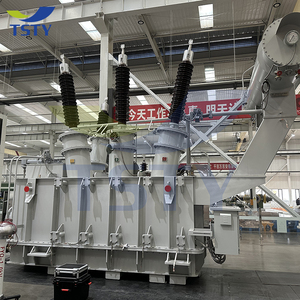
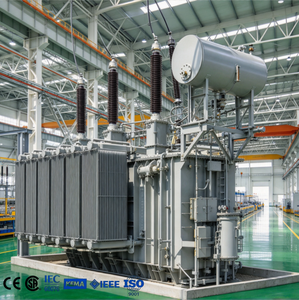
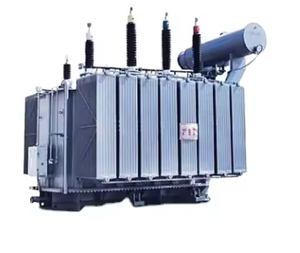
Our heavy-duty, certified step-up and step-down units feature low loss, zero-leakage structures, and high short-circuit withstand capabilities designed for heavy metallurgy, utility grids, and continuous process plants.
Combining 25+ years of panel-building automation intelligence with top-tier transformer fabrication, our automated 5,500 m² facilities eliminate lifecycle failure vectors through strict metallurgical and digital inspection.
Our oil-immersed corrugated and tubular tanks undergo submerged pneumatic pressure retention and vacuum decay testing. Automated multi-axis seam welding ensures full weld penetration, preventing mineral oil seepage and oxidation over decades of aggressive continuous operation.
Coils are wound with continuous transposition conductors (CTC) and 99.99% oxygen-free electrolytic copper. Windings are dried under constant axial hydraulic pressure clamping, yielding mechanically stabilized disc arrays capable of withstanding massive grid-fault electromagnetic shocks.
Every individual unit undergoes Double Voltage Double Frequency (DVDF) induced overvoltage validation, automated open/short-circuit characterization, computerized winding resistance analysis, and digital LCR dissipation factor evaluation before leaving the factory bay.
In modern high-voltage power networks and continuous industrial facilities (such as steel rolling mills, electrochemical smelters, data centers, and chemical processing complexes), the power transformer serves as the sole unbypassable asset. A failure at this node causes widespread downtime, severe thermal degradation, and catastrophic CAPEX erosion. For engineering procurement directors, sourcing from China demands a clear shift from viewing transformers as simple commodities to evaluating their precise technical architectures.
The efficiency curve of an industrial transformer is overwhelmingly governed by its core design. Premium Chinese manufacturing practices utilize high-grade, cold-rolled grain-oriented (CRGO) silicon steel laminations (e.g., 23Q110 or superior laser-treated grades). Precision step-lap multi-mitred joint stacking minimizes inter-laminar magnetic reluctance, reducing no-load losses (hysteresis and eddy current dissipation) by up to 25% compared to legacy punch-stacked assemblies. When evaluating suppliers, purchasers must demand certified core loss dissipation curves calculated at 1.5T to 1.7T flux densities.
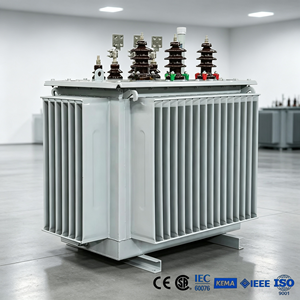
While standard naphthenic mineral oil (IEC 60296) remains common due to its low viscosity and cost efficiency, international procurement frameworks are increasingly specifying biodegradable natural ester fluids (vegetable dielectric oils conforming to IEC 62770). Natural esters offer flash points above 300°C—more than double that of mineral oil—effectively eliminating catastrophic pool fire hazards in dense commercial substations and eliminating external containment requirements.
| Evaluation Parameter | Cast Resin Dry-Type (SCB/SCR) | Sealed Mineral Oil (S11/S13/S20) | High-Voltage Transmission (110kV-220kV) |
|---|---|---|---|
| Primary Application Scope | Indoor substations, high-rise, tunnels | Outdoor distribution, industrial plants | Main grid step-down, generation step-up |
| Dielectric Media | Epoxy resin mix with quartz filler (Class F/H) | Inhibited/uninhibited mineral insulating oil | Degassed high-grade oil + high-density pressboard |
| Short-Circuit Thermal Limit | Self-extinguishing, highly localized | Dissipated by oil convection channels | Dynamic CTC conductor restraint clamps |
| Maintenance Profile | Near-zero; periodic surface dusting | Annual DGA (Dissolved Gas) & dielectric breakdown | Continuous online DGA, moisture & bushing C/DF sensing |
| Fire & Environmental Safety | Zero explosion risk; non-toxic off-gassing | Requires oil catchment basins & blast walls | Deluge water spray system + separation barriers |
Purchasing specifications for 2025 and beyond are shifting toward digital fleet monitoring. Modern industrial power units now feature built-in fiber optic micro-temperature probes embedded directly into the winding hot spots. Paired with non-intrusive high-frequency current transformers (HFCT) for real-time partial discharge (PD) monitoring and multi-gas online Dissolved Gas Analysis (DGA), facility operators can transition from schedule-based servicing to predictive health management.
Anticipate supply chain realignments, decarbonization mandates, and technical prerequisites before issuing your next major tender.
Global regulatory bodies (such as EU 548/2014 Amendment 2019/1783 and US DOE 2016 standards) impose strict limits on maximum allowable load and no-load losses. Procuring S20 equivalent or amorphous alloy cores will become mandatory to comply with Scope 2 carbon balance audits.
Forward-thinking EPCs are moving away from awarding bids solely on upfront purchase price. Comprehensive procurement formulas now capitalize the lifetime energy losses across 25 to 30 years: TCO = Initial Price + (A × No-Load Loss) + (B × Load Loss), making premium core architectures far more economical over their lifecycle.
Due to worldwide shortages of transformer grain-oriented electrical steel and high-purity electrolytic copper, international delivery schedules frequently extend beyond 60 to 80 weeks. Strategic buyers are partnering directly with agile Chinese manufacturing hubs that maintain integrated slitting and casting facilities, locking in delivery windows under 16 to 24 weeks.
Clear, unvarnished engineering answers to the primary compliance, design, and inspection questions raised by international procurement managers.
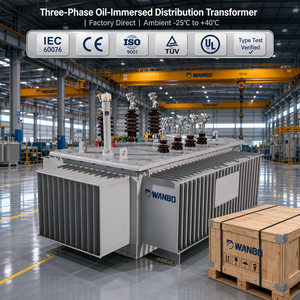
Every single transformer manufactured in our partner facilities is subjected to 100% routine testing according to IEC 60076-1, including: winding resistance measurement at all tap positions, voltage ratio verification and vector group phase-check, short-circuit impedance and load loss measurement, no-load loss and no-load current verification, separate source AC dielectric withstand testing, and Double Voltage Double Frequency (DVDF) induced overvoltage validation. Type tests (temperature rise, lightning impulse full-wave withstand, and short-circuit dynamic withstand) are carried out in accredited third-party laboratories (such as KEMA, CESI, or national testing hubs) upon project specification.
To avoid technical misalignments and receive an accurate proposal, provide: Rated Power Capacity (kVA or MVA), Primary/Secondary Voltages and tapping range (e.g., ±2×2.5% or OLTC), Phase configuration and Frequency (50Hz or 60Hz), Vector Group connection (e.g., Dyn11, YNd11), Cooling Type (ONAN, ONAF, AN, AF), Short-Circuit Impedance percentage (%Z), Environmental Site Conditions (ambient extremes, altitude >1000m, seismic zone, marine/corrosive atmosphere), and the required efficiency standard (IEC Tier 2, EcoDesign, IEEE C57).
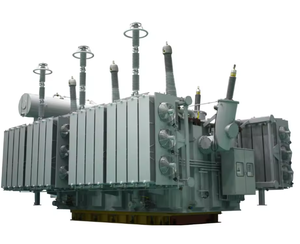
A De-Energized Tap Changer (Off-Circuit Tap Changer) requires the transformer to be completely isolated from the incoming medium/high-voltage supply before mechanical tap changes can be executed, typically accommodating seasonal network voltage variances. An On-Load Tap Changer (OLTC) employs specialized transition resistors or vacuum diverter switches to adjust the turns ratio seamlessly under full load without breaking circuit continuity, essential for transmission nodes, arc furnaces, and plants with unpredictable incoming utility stability.
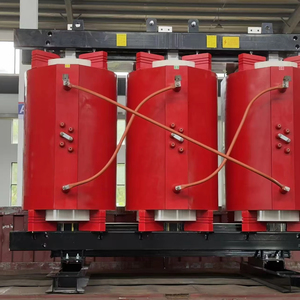
Cast resin dry-type transformers (such as the SCB series) replace liquid oil with solid vacuum-cast epoxy resin mixed with silica filler. They are intrinsically non-flammable, self-extinguishing, and environmentally neutral—completely eliminating the risk of ground contamination or oil explosion. Consequently, they are preferred for underground systems, high-occupancy hospitals, maritime vessels, cleanroom manufacturing plants, and high-density interior commercial substations where civil fire-suppression budgets can be minimized.
Export units undergo intensive export preservation protocols. Tanks are thoroughly cleaned, shot-blasted to SA 2.5 profile, and coated with multi-layer high-build epoxy-polyamide primers followed by aliphatic polyurethane topcoats resilient to marine salt-fog (C5-M environment certified). For large units transported filled with oil, positive nitrogen blankets are maintained with pressure gauges monitored throughout shipment. Internal desiccant breathers and hermetically sealed moisture barriers prevent humidity infiltration across open-ocean voyages.
Connect directly with our senior transformer engineering team to calculate technical losses, confirm vector group alignments, and receive tailored commercial proposals within 24 business hours.
Get a Quote