Santej, Ahmedabad, Gujarat, IndiaCE-Marked Transformers for Export
Serving OEMs & Projects Worldwide
CEMarked
China Top Industrial Automation Panel Manufacturers & Manufacturer
Precision-Engineered Switchgear, Power Magnetics, and Integrated Control Infrastructure for Tier-1 Global Applications
30+ YearsPanel Engineering Heritage
5,000 kVAMax Heavy-Duty Power Rating
CE & ISOCertified International Compliance
100% FullyTested Automation Solutions
High-Performance Equipment Portfolio
Industrial Automation & Power Magnetics Modules
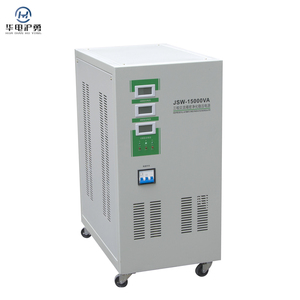
Custom-engineered subsystems constructed to mitigate power distortion, deliver seamless process automation, and maintain thermal equilibrium across critical environments.
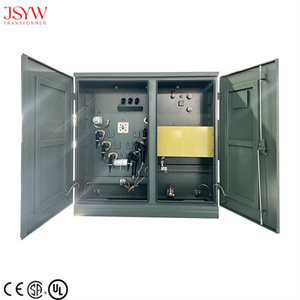
Engineered for robust loop-feed distribution networks, featuring precision-wound aluminum coils, compartment isolation, and full compliance for factory substations.
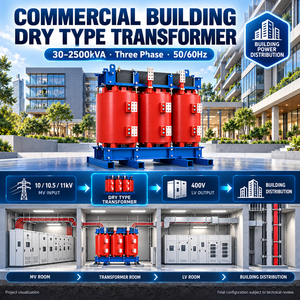
Self-extinguishing, flame-retardant dry-type power regulation unit optimized for commercial facilities, mission-critical infrastructure, and MCC automation integration.
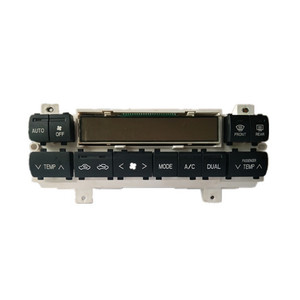
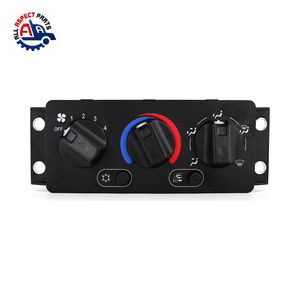
Ruggedized tactile environment switch architecture with environmental sealing, low contact impedance, and dependable signal switching under extreme vibrations.
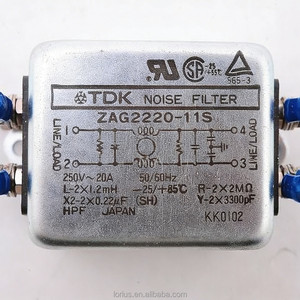
Medical and industrial diagnostic grade line-suppression module delivering high-attenuation broad-spectrum EMI dampening to secure pristine signal clarity.
Miniature bulkhead feedthrough suppression assembly optimized for high chassis ground isolation, high breakdown ratings, and harsh RF operational profiles.
Ultra-low loss core topology engineered using grain-oriented silicon sheets with vacuum oil infusion, optimized for heavy plant main distribution frames.
Decades of mastery translating complex electrical single-line diagrams (SLDs) into certified, high-reliability control panels, switchgear, and magnetic equipment.
Parent-Group Automation Heritage
Grounded in industrial automation panel engineering since 1990, our manufacturing infrastructure bridges electrical magnetic hardware seamlessly with PLC, PC, and SCADA monitoring tiers.
High Inrush & Harmonic Tolerance
Built with precision coil calculations to handle demanding switching transient profiles, inductive inrush surges from multiple contactor closures, and heavy inverter switching noise.
Fully Computerized Routine Testing
Every enclosure, panel build, and magnetic module undergoes exhaustive digital OC/SC verification, Double Voltage Double Frequency (DVDF) checks, and Megger insulation diagnostics.
Technical Whitepaper: Sourcing & Engineering Industrial Automation Panels in China
Modern industrial plants operate in an era defined by aggressive cyber-physical convergence, elevated voltage variations, and demanding harmonic footprints. Procuring an industrial automation panel or control cabinet from an established manufacturer requires looking past the surface sheet-metal fabrication to understand internal thermal management, clearance standards, galvanic separation, and transient electromagnetic isolation. As a premier industrial automation panel manufacturer, our end-to-end integration ecosystem merges three decades of precision control architecture with industrial magnetics design to guarantee uninterrupted system uptime.
1. Anatomical Fundamentals of High-Reliability Automation Panels
An industrial automation panel is the central nervous system of any distributed control installation. Whether housing Programmable Logic Controllers (PLCs), Human-Machine Interfaces (HMIs), Variable Frequency Drives (VFDs), or primary power switchgear, the design configuration must respect the thermal and physical laws of electrical enclosure engineering:
Separation of Power and Signal Pathways: Strict isolation of 480V/415V three-phase high-voltage power feeds from sensitive 24V DC analog instrumentation (4-20mA, thermocouple lines, RS-485 Modbus, and Industrial Ethernet) prevents capacitive and inductive cross-talk.
Thermal Density Dissipation: Compact modern components pack greater compute performance into smaller cubic footprints, generating concentrated heat zones. Precision airflow channeling, passive heat-sink convection, and active closed-loop NEMA 4X air handling prevent semiconductor switch degradation.
Inrush Dynamic Sizing: Sizing internal control transformers requires dynamic vector calculation rather than basic static arithmetic. When multiple magnetic contactors, pneumatic solenoids, and circuit relays engage simultaneously, the control transformer must preserve line voltage without dropping past 95% nominal rating, preventing premature coil dropouts.
2. Power Quality: The Hidden Weakness in Modern Control Panels
Modern automated facilities produce unprecedented high-frequency noise through widespread VFD switching and SCR thyristor firing. Without dedicated line reactors, sine-wave filtration, and broad-spectrum EMI suppressors (such as the ZAG2220 and threaded bulkhead feedthroughs shown in our catalog), high-speed IGBT carrier frequencies inject reflected wave reflections into downstream motors and generate common-mode ground currents. Our panels incorporate purpose-engineered inductors, cast resin step-up/down isolating stages, and line-smoothing chokes to isolate critical instrumentation from upstream utility grid spikes.
Evaluation Parameter
Standard Low-Cost Assembled Panels
Tier-1 Engineering Standard (Our Benchmark)
Internal Wiring Architecture
Unsegregated wiring ducts, thin PVC trunking
UL/CE color-coded, halogen-free, isolated voltage conduits
Future Sourcing & Technological Trends in Industrial Automation Panels
For international procurement directors, Chief Technology Officers, and plant engineers, purchasing practices are undergoing rapid structural shifts. Navigating the next decade of industrial growth requires keeping three major trends front of mind:
A. Smart Diagnostics via Edge-Connected Switchgear
The standard manual control enclosure is yielding to intelligent edge-connected panels. Procurement specifications increasingly require embedded micro-sensors measuring internal ambient humidity, continuous busbar joint thermal profiles, and leakage current trends. Rather than discovering component degradation during an unpredicted factory outage, these integrated units send predictive telemetry over OPC UA and MQTT protocols directly into cloud-based maintenance suites.
B. Decarbonization and High-Efficiency Dry-Type Magnetics
Global environmental mandates and insurance restrictions are driving a move away from oil-filled transformers in indoor municipal, commercial, and automation complexes. Cast-resin dry-type transformers, manufactured with vacuum-pressure impregnated resin mixtures, deliver Class-F or Class-H insulation profiles without hazardous hydrocarbon oils. These transformers can be safely positioned inside the manufacturing plant next to the main panel, dramatically shortening low-voltage copper busbar runs and lowering $I^2R$ distribution losses.
C. Modular Plug-and-Play Enclosure Architecture
Accelerated factory deployment schedules have made traditional point-to-point on-site field wiring obsolete. Leading OEMs are demanding modular automation assemblies that arrive fully wired, pre-configured with terminal drop-blocks, and verified through digital testing before ocean transit. Modular enclosures allow rapid horizontal integration, cutting on-site commissioning timelines from weeks to days.
Clear Engineering Answers
Frequently Asked Procurement Questions
Essential guidance for EPC contractors, OEM machine builders, and system integrators sourcing automation equipment from China.
How should I specify my panel to prevent coil chattering under high load?
Provide your supplier with both the sealed (continuous holding) VA and the total peak inrush VA drawn when all downstream coils, contactors, and pilot loads energize concurrently. The internal control transformer must be engineered with low internal impedance and precise secondary winding regulation to keep voltage drops within acceptable limits during transient inrush conditions.
What international safety certifications should we mandate for export shipments?
Ensure panels and internal magnetics carry clear CE markings matching low-voltage directive IEC/EN 61439-1/2 for low-voltage switchgear assemblies, alongside IEC 60076 for power transformers. Enclosures destined for North America must adhere to UL 508A specifications, and internal control components should be selected from approved component registries.
What is the functional difference between an auto-transformer and an isolation transformer inside a panel?
An auto-transformer shares a common primary and secondary winding, providing cost-effective voltage conversion with a compact physical footprint, but it offers zero electrical galvanic separation. An isolation transformer uses magnetically coupled, physically separated windings to create a new neutral ground plane, block DC currents, and shield sensitive PLCs from grid noise.
How do line and load reactors improve VFD lifespan within MCC cabinets?
Line reactors sit at the drive input to suppress utility spikes, reduce total harmonic distortion (THD), and buffer the input rectifier diodes. Load reactors sit between the inverter output and motor terminals, softening rapid voltage rises (dv/dt spikes), preventing early winding breakdown, and stabilizing long power cable runs.
Architect Your Industrial Automation Infrastructure Today
Collaborate directly with senior engineering specialists to finalize custom panel layouts, select ideal line transformers, and secure factory-direct pricing for your project.