CEMarked CEMarked
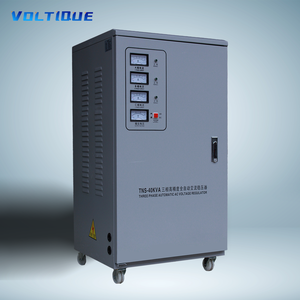
Factory-direct OEM/ODM engineering supporting ATEX Zone certification, custom VFD motor mitigation, precision automatic voltage stabilization, and medium-voltage substation configurations.
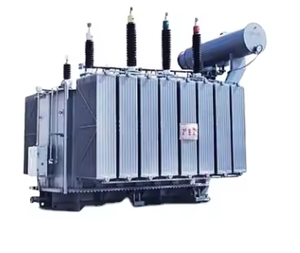
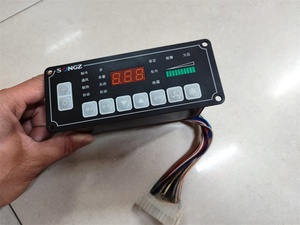
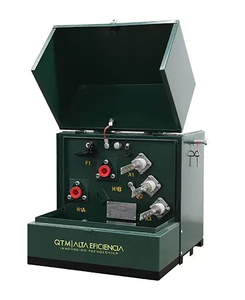
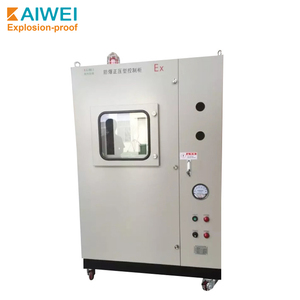
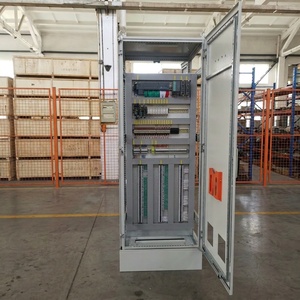
Modern industrial automation has evolved beyond basic pushbuttons, analog dials, and standalone mimic panels. Today’s high-throughput facilities—ranging from chemical processing plants and offshore oil platforms to automated discrete manufacturing—demand unified Human-Machine Interface (HMI) Control Panels that bridge physical industrial equipment with Supervisory Control and Data Acquisition (SCADA) networks. As an industry-leading China HMI control panel manufacturer and global exporter, our engineering infrastructure combines high-performance microprocessors, rugged industrial capacitive and resistive touchscreens, intrinsic safety barriers, and tailored power magnetics under one unified manufacturing methodology.
Our roots trace back through over three decades of advanced industrial automation panel design, building specialized PC, PLC, and distributed SCADA systems since 1990. We recognize that an HMI control panel is not merely a display in a cabinet; it represents the critical deterministic bridge between field operators, programmable logic controllers (PLCs), distributed I/O modules, variable frequency drives (VFDs), and enterprise execution systems. Delivering resilience in this environment requires specialized thermal dissipation engineering, harmonic suppression via dedicated line and load reactors, transient spike clamping using integrated voltage stabilizers, and explosion-proof containment compliant with strict ATEX and Ex d directives.
| Architecture Tier | Display & Processing Technology | Industrial Fieldbus Protocols | Environmental Ingress & Safety | Typical Industrial Deployment |
|---|---|---|---|---|
| Embedded Compact HMI | 4.3"–10.1" TFT LCD, ARM Cortex-A53, Low-power RTOS / Embedded Linux | Modbus RTU/TCP, CANopen, RS-485 Serial | IP65 front bezel, NEMA 4X, conformal coated PCB | Standalone packaging lines, HVAC chillers, machine tool OEM assemblies |
| Advanced Edge PLC/HMI | 12.1"–21.5" Projected Capacitive Multi-touch, Intel x86 / Quad-core ARM, Debian / Win10 IoT | EtherNet/IP, PROFINET IRT, EtherCAT, OPC UA, MQTT | IP66/67, NEMA 12/13, MIL-STD-810G shock/vibration | Continuous chemical processing, automotive assembly lines, municipal water distribution |
| Explosion-Proof Ex d / ATEX Panel | 15"–24" Toughened explosion-resistant glass, flameproof cast aluminum / SS316 enclosure | Fiber Optic SCADA, Redundant Industrial Ethernet, Isolated RS-485 | ATEX Zone 1/21 & Zone 2/22, IECEx Ex d IIB+H2 T6 Gb, IP66 | Refineries, offshore oil drilling rigs, pharmaceutical dust processing, grain handling |
| Integrated Power & Drive Enclosure | Centralized Master HMI display with integrated VFDs, chokes, and input/output transformers | Profibus-DP, Modbus TCP, DeviceNet, BACnet MS/TP | NEMA 3R outdoor rainproof, Pad-Mounted, Forced air or liquid closed-loop cooling | Medium-voltage pump stations, heavy mining conveyor drives, utility substations |
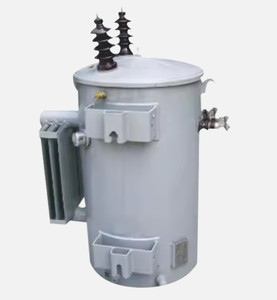
Where conventional panel assemblers simply purchase third-party components and assemble them into off-the-shelf boxes, our facility operates a comprehensive 5,500 m² modern manufacturing and testing complex. Supported by an automation lineage established in 1990, we build integrated control assemblies from the magnetic core upward. Our proprietary capabilities span precision sheet metal fabrication, Class H and Class F copper winding for custom dry-type and oil-immersed transformers (up to 5,000 kVA), high-frequency reactor tuning (up to 2,500 A), and certified ATEX/IECEx hazardous panel engineering.
We eliminate nuisance tripping, harmonic overheating, and transient damage by engineering our own line/load reactors, harmonic filters, and static voltage stabilizers directly matched to your HMI and VFD panel specs.
Every unit undergoes strict computerized validation: Double Voltage Double Frequency (DVDF) testing, insulation resistance (Megger), open-circuit/short-circuit characterization, LCR metering, and thermal infrared scanning.
Engineered for global export across North America, Europe, the Middle East, and Southeast Asia. We supply full schematic CAD packages, bill of materials traceability, and certified CE compliance for demanding EPC projects.
Trusted by Global Engineering Giants, EPC Contractors, and Heavy Industries:
International procurement teams facing complex manufacturing challenges are moving away from fragmented sourcing models toward turnkey control solutions. Procuring an HMI touch display from one vendor, a PLC rack from another, power transformers from a third, and local enclosure assembly from a fourth introduces acute supply-chain latency, warranty disputes, and severe electromagnetic compatibility (EMC) vulnerabilities. The modern paradigm emphasizes holistic panel system engineering characterized by four defining technical trajectories:
Modern HMIs have transitioned from proprietary runtimes to browser-based, lightweight HTML5 interfaces. This enables responsive visualization on mobile tablets, remote control room terminals, and localized operator screens without rewriting interface code.
Industrial buyers now mandate seamless telemetry directly from field-level HMI panels to cloud platforms (AWS IoT SiteWise, Microsoft Azure IoT Hub). Native support for OPC UA and lightweight pub/sub MQTT protocols ensures zero gateway bottlenecking.
Procurement teams increasingly optimize for 10-to-15-year lifecycle durability. Panels engineered with optical bonding, Class H thermal insulation, integrated line reactors, and NEMA 4X/IP66 enclosures eliminate unbudgeted downtime and continuous repair cycles.
When submitting an RFP or RFQ for industrial HMI control panels, providing complete engineering boundary conditions guarantees accurate quotes and eliminates downstream commissioning failures. Our senior engineering team recommends structuring panel specifications according to five critical parameters:
1. Inrush VA vs. Steady-State Burden Sizing: In control panels running pilot lamps, contactors, auxiliary solenoids, and capacitive touchscreen controllers, the instantaneous inrush current can exceed steady-state consumption by 300% to 800%. Sizing a control transformer solely on continuous sealed VA results in deep momentary voltage dips during large contactor pull-in, leading to microsecond HMI reboots or PLC watchdog faults. Always calculate the maximum instantaneous inrush condition.
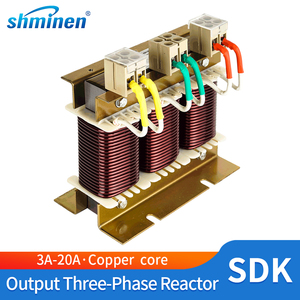
2. dv/dt Mitigation and Cable Distance Calculations: When your HMI panel integrates Variable Frequency Drives (VFDs) controlling remote motors, IGBT pulse-width modulation creates high-frequency reflective voltage spikes that destroy motor bearing grease and winding dielectric layers. If motor cable distances exceed 30 meters, specify an output line reactor (e.g., our Minen SDK series); for runs beyond 150 meters, specify a full sine wave filter up to 500 HP.
3. Hazardous Area Classification and Purge Systems: For oil, gas, chemical, and flour milling environments, verify whether your installation area requires Ex d flameproof cast enclosures (capable of withstanding internal ignition without venting flame) or Ex p positive pressure purge systems (purging the enclosure with clean instrument air or inert nitrogen to prevent hazardous atmosphere ingress).
4. Touchscreen Sensor Physics (Resistive vs. Projected Capacitive): For heavy industrial plants where operators wear thick insulated gloves or where splashing water, cutting oil, and conductive slurries are common, 5-wire analog resistive touch panels or optically bonded high-surface-hardness PCAP screens with auto-rejection algorithms prevent false actuation.
• Main Input Supply (Voltage, Frequency, Phase: e.g., 380V / 480V / 600V, 50/60 Hz)
• PLC/HMI Brand Preference (Siemens, Rockwell/Allen-Bradley, Schneider, Mitsubishi, Omron, or Cost-Effective Open Embedded Linux)
• Environmental Ingress Rating (IP54, IP65, IP66, NEMA 3R, NEMA 4X Stainless Steel 304/316)
• Operating Ambient Temperature Range (-25°C to +55°C, humidity levels, direct solar exposure)
• Mandatory Certification Standards (CE, UL 508A, ATEX Zone 1/2, IECEx, RoHS)