 CEMarked CEMarked
Explore Tier-1 Chinese high-reliability inductive coils, compensation reactors, precision voltage stabilizers, and medium-voltage distribution systems engineered for global power grids.
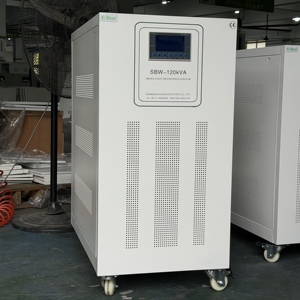
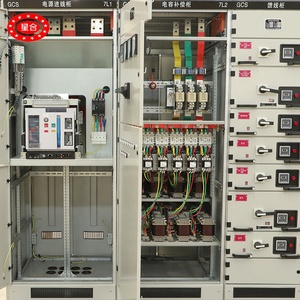
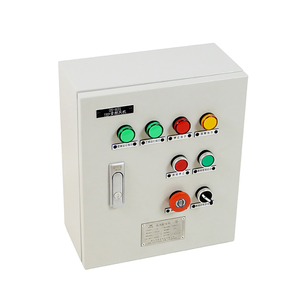
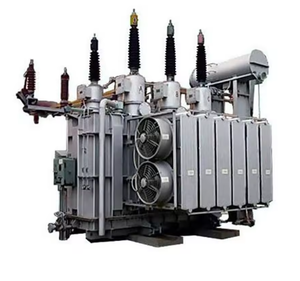
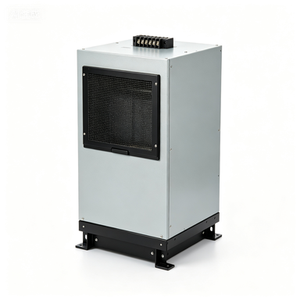

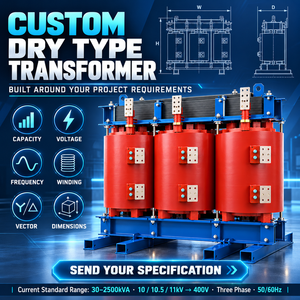
In high-voltage transmission networks, long-distance cables, and expansive utility grids, capacitive charging currents naturally generate voltage surges under low-load conditions—a phenomenon known as the Ferranti Effect. Modern shunt reactors serve as indispensable inductive power-frequency absorbers. By placing a shunt reactor directly across transmission lines or tertiary windings of substations, grid operators directly neutralize excessive reactive power (MVAR), dampen transient switching surges, mitigate harmonic pollution, and secure operational reliability.
China's best shunt reactor factories have emerged as premier global manufacturing hubs due to their mastery of ultra-high-voltage (UHV) core technology, vacuum pressure impregnation (VPI), low-loss magnetic core fabrication, and heavy-duty gapped-iron or air-core architectures. Backed by rigorous automated routine testing protocols and supply chains integrated from raw grain-oriented electrical steel (CRGO) to high-conductivity electrolytic copper conductors, Chinese exporters deliver systems that consistently exceed standard IEC 60076-6 and IEEE C57.21 performance benchmarks.
Procurement directors must determine the optimal reactor topology based on installation footprint, environmental conditions, system voltage, and acoustic noise limitations. Leading China manufacturers specialize in both primary structural configurations:
| Design Metric | Oil-Immersed Gapped Iron-Core Reactor | Dry-Type Air-Core Shunt Reactor |
|---|---|---|
| Voltage Envelope | Medium to Ultra-High Voltage (35kV up to 1000kV UHV) | Substation Distribution & MV/HV Systems (10kV to 110kV) |
| Magnetic Circuit Structure | Segmented iron core separated by precision non-magnetic ceramic/marble spacers | Open air-core design; zero ferromagnetic saturation risk; absolute linearity |
| Cooling System | ONAN, ONAF, OFAF with high-grade inhibited mineral or synthetic ester oil | Natural air convection (AN); maintenance-free, non-flammable epoxy casting |
| Acoustic & Vibration Control | Requires precision tie-rod mechanical pre-stressing to cancel magnetic-gap magnetostriction | Extremely low acoustic vibration; zero core magnetostriction noise |
| Substation Footprint | Compact, self-contained steel tank; ideal for space-constrained indoor/substation bays | Requires safety clearances and magnetic-field exclusion buffer zones |
| Key Grid Application | Long EHV/UHV lines, offshore wind export subsea cable reactive charging compensation | Industrial plant power factor correction, tertiary winding bus stabilization, static VAR systems |
How digital twins, biodegradable dielectric fluids, and offshore renewable interconnects are redefining international utility procurement strategies through 2030.
The global surge in multi-gigawatt utility solar installations and high-capacitance subsea offshore wind cables requires high-inertia, low-loss shunt reactors. Exporters in China are rapidly engineering dynamic Variable Shunt Reactors (VSRs) equipped with on-load tap changers (OLTC) to accommodate fluctuating generation without inducing grid instability.
Global environmental mandates (EU Ecodesign, US EPA guidelines) are steering procurement toward high fire-point natural and synthetic ester oils. Leading Chinese plants have optimized inner insulation layouts and radial heat dissapation channels specifically designed for high-viscosity bio-liquids, ensuring 100% biodegradable operation.
Forward-thinking utility buyers evaluate bids not merely on unit CIF cost, but via 30-year capitalized no-load loss formulas. Advanced laser-scribed CRGO steel laminations and stepped-gap stacking configurations engineered by top exporters cut operational hysteresis and eddy losses by upwards of 28% compared to legacy designs.
China's leading electrical machinery manufacturers have invested aggressively in precision fabrication to overcome acoustic resonance, fringing flux loss, and electromagnetic interference.
Utilizing high-modulus ceramic or sintered steatite spacers bonded with high-temperature epoxy to maintain exact millimetric gap tolerances, dampening 100Hz/120Hz magnetostriction noise down to sub-65 dBA thresholds.
Application of laminated magnetic flux shunts and non-magnetic stainless steel structural clamps inside the tank wall prevents stray fringing flux from inducing localized tank overheating and hot-spot oil degradation.
Integrated multi-channel fiber-optic thermal probes embedded directly in winding hot spots, coupled with online dissolved gas analysis (DGA) and vibration sensors delivering real-time telemetry to central SCADA systems.
Utilization of CTC (Continuously Transposed Cable) with baked enamel insulation to drastically suppress skin and proximity effect losses across high-current medium-voltage and extra-high-voltage winding packages.
Combining heavy-duty plant infrastructure, automated testing laboratories, and seasoned automation engineering heritage to serve demanding international OEM contracts.
Equipped with computerized open-circuit and short-circuit (OC/SC) test systems, high-precision CT/PT calibration bays, and automated loss measurement platforms that log test data directly to tamper-proof inspection certificates.
Every unit undergoes high-frequency overvoltage testing (DVDF) and high-voltage impulse verification to guarantee inter-turn and inter-winding insulation integrity under severe switching surge conditions.
In-house digital LCR meters, micro-ohm and milli-ohm winding resistance testers (25V AC/DC), insulation resistance testers (Megger up to 5000V), and infrared thermal imaging cameras verifying thermal equilibrium during heat-run audits.
Decades of industrial group heritage building PC, PLC, and SCADA-based distribution, MCC, and pressurized flameproof switchboards ensuring seamless structural, mechanical, and electrical coordination on foreign EPC sites.
Essential technical clarifications, testing methodologies, compliance requirements, and quotation criteria for electrical system engineers and global EPC contractors.