Santej, Ahmedabad, Gujarat, India CE-Marked Transformers for Export
Serving OEMs & Projects Worldwide
Direct Industrial Manufacturing & Global EPC Supply

China Best PCC Control Panel Factories & Exporters

Engineering High-Performance Power Control Center (PCC) Switchboards, Intelligent Low-Voltage Distribution, and Heavy Industrial Magnetics Under Rigorous IEC 61439-1/2 Compliance.

25+
Years Engineering Heritage
6300A
Max Busbar Current Rating
100kA
Short-Circuit Withstand (1s)
5,500m²
Certified Testing & Fab Plant
100%
Computerized FAT Tested
Industrial Portfolio

Featured PCC Switchboards, Transformers & Heavy Power Systems

Engineered for Tier-1 mission-critical facilities, chemical infrastructure, high-power grid step-down, and industrial automation. Every unit is strictly certified and fully export-ready.
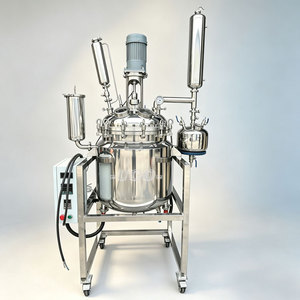
Process Autoclave 50L Pilot Scale Continuous Stirred Double Walled Pressure Vessel Reactor

50L Pilot Scale Continuous Stirred Double Walled Pressure Vessel Reactor

Laboratory reflux chemical autoclave with explosion-proof thermal control interfaces and multi-stage pressure safety interlocks.
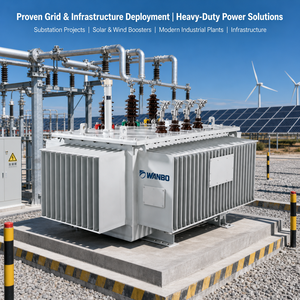
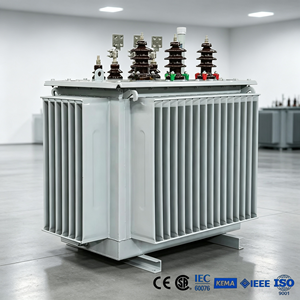
Substation MV/HV S20 3 Phase Oil-Immersed MV & HV Transformer 630kVA

S20 3 Phase Oil-Immersed MV & HV Transformer 630kVA Power Unit

Ultra-low loss silicon steel core, hermetically sealed radiator fins, rated up to 35kV with custom step-down tap changers.
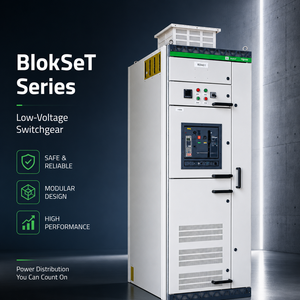
PCC / MCC Cabinet Low Voltage Switchgear 400V 690V Fixed And Drawer Type Distribution Cabinet

Low Voltage Switchgear 400V 690V Fixed & Drawer Type PCC Cabinet

Form 4b modular isolation, IP40/IP54 ingress defense, engineered specifically for hyperscale data centers and continuous manufacturing.
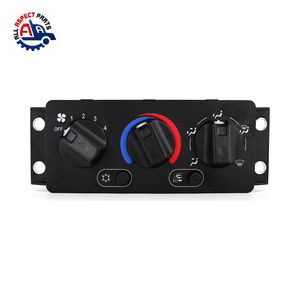
HVAC Automation AA PARTS HVAC Temperature Control Panel OE 70826280

AA PARTS HVAC Temperature Control Panel for Heavy Fleet CXU612/613

Precision OE 70826280 thermal regulation architecture, severe vibration dampening, and rugged climate actuation logic.
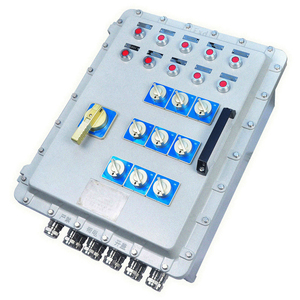
Hazardous Area Ex d ATEX Explosion Proof Electrical Control Panel Cabinet

ATEX Explosion Proof Enclosure Box Electrical Exd Control Panel

Flameproof Ex d IIB/IIC T6 rating, stainless steel / cast aluminum housing certified for offshore petrochemical drilling rigs.
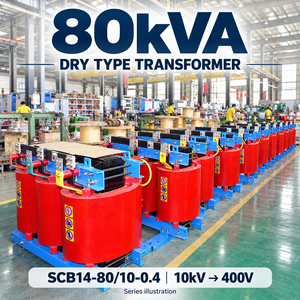
Dry-Type Distribution 3 Phase Dry Type Distribution Transformer 80 KVA

3 Phase Dry Type Distribution Transformer 80kVA 10kV to 400V ANAF

Epoxy cast resin dry transformer, fire-retardant Class F/H insulation, optimized for indoor municipal sub-stations and high-rises.
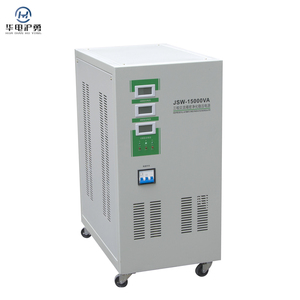
Power Quality / AVR Fully Automatic Three Phase Sliding AC Voltage Stabilizer 30KVA

Automatic 3-Phase Sliding AC Industrial Voltage Stabilizer 30KVA

Pure electrolytic copper core, high-speed transient response, micro-stepping compensation with comprehensive trip protection.
Pad-Mounted Utility Industrial Transformer Pad Mounted 50kVA to 500kVA

Industrial Compartmental Pad-Mounted Transformers 50kVA–500kVA

Tamper-proof outdoor cabinet construction, integrated primary loop switches, bay-o-net fuse protection for renewable solar/wind yards.
Engineering Whitepaper • Low Voltage Distribution

Architectural Anatomy of Modern Power Control Centers (PCC Panels)

In modern electrical distribution networks, the Power Control Center (PCC Panel) functions as the foundational nerve center of an industrial installation. Positioned directly downstream of utility step-down transformers (MV/LV) or primary cogeneration generator sets, the PCC panel regulates, monitors, splits, and protects high-amperage bulk power (typically ranging from 1000A up to 6300A) before routing it onward to Motor Control Centers (MCC), sub-distribution switchboards, and critical facility assets.

Unlike light commercial sub-distribution boards, an industrial-grade PCC panel manufactured in top China OEM facilities is subjected to extreme electrodynamic and thermal stresses. During peak fault occurrences, prospective short-circuit currents can rapidly surpass 50kA to 100kA rms for a duration of 1 second (Icw). Managing such energy surges requires verified compliance with IEC 61439-1/2 (Low-voltage switchgear and controlgear assemblies) and GB/T 7251.12 standards.

Engineering Metric Standard Commercial Board High-Spec Industrial PCC Panel China Tier-1 Export Specification
Rated Operational Current (In) 250A – 800A 1000A – 4000A Up to 6300A Main Air Circuit Breakers (ACB)
Internal Form Segregation Form 1 / Form 2a Form 3b / Form 4a Form 4b Type 7 (Full Terminal Separation)
Short-Time Withstand (Icw) 15kA – 25kA / 1s 50kA / 1s 65kA to 100kA / 1s (Tested per IEC 61439-2)
Busbar Conductivity & Plating Commercial 98% Cu / Bare T2 ETP Copper (>99.9%), Bare/Tinned 99.99% T2 Electrolytic Cu, Full Silver/Tin Plating
Enclosure Protection Index IP30 – IP31 Indoor IP42 – IP54 Indoor/Sheltered IP54 Standard, IP65/Ex d ATEX for Hazardous
Communication Telemetry Hardwired dry contacts Modbus RTU over RS485 Native IEC 61850, Modbus TCP, PROFINET & IoT Gateways

Key Subsystems in China-Manufactured PCC Switchgear:

  • Incomer & Bus Coupler Sections: Equipped with 3-pole or 4-pole draw-out Air Circuit Breakers (ACBs) with microcomputer-controlled trip units (LSIG: Long-time, Short-time, Instantaneous, Ground fault protection). Features mechanical and electrical interlocks for ATS (Automatic Transfer Switch) dual-utility synchronization.
  • Main Horizontal & Vertical Busbar Matrix: Fabricated from 99.99% pure electrical copper with rounded edges to mitigate corona discharge. Fully insulated with high-dielectric heat-shrink sleeves and engineered with fiberglass-reinforced sheet molding compound (SMC) busbar holders capable of withstanding dynamic repelling forces during short circuits.
  • Outgoing Feeder Compartments: Utilizing either fixed, plug-in, or fully withdrawable cassettes (draw-out modules). Draw-out execution guarantees that individual feeders can be isolated, racked out, and serviced without de-energizing the main power bus, ensuring uninterrupted uptime.
  • Power Quality Correction Blocks: Integral inclusion of automatic power factor correction (APFC) thyristor-switched banks, along with active harmonic filters (AHF) and line reactors to maintain plant Total Harmonic Distortion (THDi) under 5% to safeguard sensitive automation hardware.
Why Global EPCs Choose Us

Manufacturing Superiority & Engineering Heritage

Rooted in over 25 years of specialized automation, magnetic design, and switchgear manufacturing, we bridge the gap between custom engineered-to-order complexity and competitive export pricing.

25+ Years Automation Heritage

Having built PC, PLC, and SCADA-based automation panels since 1990—including flameproof, pressurized, and intrinsically safe systems—we design PCC panels from an automation engineer's standpoint, eliminating field integration conflicts.

100% Computerized Routine Testing

Our 5,500m² facility features computerized open/short-circuit test panels, insulation resistance megohmmeters, infrared thermal rise scanning, and Double Voltage Double Frequency (DVDF) stress stations prior to shipment dispatch.

Form 4b Modular Segregation

Physical steel and insulating barrier partitioning between busbars, functional functional units, and external cabling terminations prevent cascading arc faults, allowing safe live maintenance in mission-critical plants.

CE Marked & International Standards

All control centers, distribution units, and heavy magnetics carry CE documentation and type-test certification compliant with IEC 61439-1/2, IEC 60076, and ATEX/IECEx hazardous atmosphere safety mandates.

Complete End-to-End Magnetics

Unlike pure sheet-metal assemblers, our in-house line winds and produces control transformers (50VA–5000kVA), line/load reactors up to 2500A, and voltage regulators, ensuring total supply chain control and zero third-party delay.

Global Turnkey OEM/ODM Capability

Exporting to over 45 international project contractors across mining, oil & gas, steel, and renewable power. We deliver bespoke enclosure dimensions, custom busbar routings, and dual-language technical schematics.

Strategic Sourcing Analysis

Future Procurement Trends in PCC Control Panels (2025–2030)

Procurement leaders and EPC contractors face an evolving landscape of carbon accounting, digitized supply chains, and component standardization. Here is how leading global buyers are shifting their procurement strategies.

01

Total Cost of Ownership (TCO) vs Capital Outlay

Historically, procurement centered strictly on initial ex-factory cost ($/panel). By 2026, over 70% of multinational RFQs incorporate electrical lifecycle loss metrics. Copper busbar cross-sectional sizing, silver-plating grade, and internal ventilation aerodynamics directly determine operating temperatures. Every 10°C decrease in continuous internal operating temperature halves the insulation degradation rate and cuts kWh thermal dissipation losses significantly over a 20-year plant operational lifecycle.
02

Smart Digital Switchgear Specification

Procurement teams are retiring legacy analogue meters in favor of IoT-native, digitally instrumented switchgear. Modern tenders require non-invasive wireless Surface Acoustic Wave (SAW) or infrared continuous temperature sensors on main busbar joints, combined with edge gateways communicating via IEC 61850 or OPC UA. Early detection of thermal anomalies prevents catastrophic arc flash incidents before breaker trips can ever occur.
03

Modular Modularization & Plug-and-Play Cassettes

Minimizing Mean Time to Repair (MTTR) has become a primary procurement KPI. Enterprise buyers are shifting from fixed-bolted switchboards toward withdrawable drawer-type architectures. Using standardized racking drawer cassettes allows plant operators to swap out a malfunctioning 250A or 400A feeder in less than 5 minutes without opening the main feeder busbar enclosure or scheduling plant-wide blackouts.
04

Vendor Neutrality & Open Architecture

Recent global supply chain bottlenecks taught international EPCs to avoid sole-source proprietary switchboard assemblies. Buyers now demand China factories that engineer enclosures capable of housing universal breaker footprints (e.g., ABB Emax, Schneider MasterPact, Siemens Sentron, or high-tier domestic brands like Chint/Delixi). This structural neutrality prevents years of retrofit friction during spare part replacement.
05

Scope 3 Decarbonization & Recycled Materials

International sustainability compliance requires transparent documentation of embodied carbon. Global tenders increasingly mandate environmental product declarations (EPDs) for the steel enclosure (electro-galvanized cold rolled steel), busbar smelting sourcing, and non-toxic powder coating methods. China manufacturers adopting green smelting and ISO 14001 certified closed-loop production are winning premier international bids.
06

Factory Acceptance Testing (FAT) Digitization

Cross-border procurement now regularly utilizes high-definition live video FAT protocols, remote calibration witnessing, and automated cloud-generated test reporting. Buyers can review milli-ohm contact resistance values, dielectric withstand test runs, and breaker primary injection test curves in real time, dramatically compressing shipping lead schedules and reducing inspection travel budgets.
Technology Roadmap

Technological Advancements in PCC Control Panels

From active internal arc mitigation systems to AI-driven predictive asset management, explore the engineering innovations redefining modern low-voltage power distribution.

1. Optical Ultra-Fast Internal Arc Flash Containment

An internal electric arc can reach plasma temperatures exceeding 10,000°C within 15 milliseconds, causing explosive pressure shockwaves that endanger maintenance personnel and annihilate entire switchgear galleries. Next-generation PCC panels engineered by leading Chinese exporters integrate fiber-optic point detectors and loop sensors placed strategically throughout the busbar and cable compartments.

Coupled with ultra-fast solid-state arc quenchers or high-speed trip relays, these systems detect the optical light pulse of an arc and command upstream circuit breaker tripping in under 4 to 7 milliseconds—extinguishing the fault long before destructive air expansion and structural rupture occur.

2. AI-Driven Predictive Maintenance & Asset Health Indexing (AHI)

Moving beyond scheduled preventive shutdowns, smart PCC panels utilize continuous telemetry processing via onboard edge computing modules. By monitoring real-time breaker mechanical opening times, charging motor currents, contact wear profiles, and dynamic load cycling, the internal system calculates a real-time Asset Health Index (AHI).

Maintenance crews are automatically alerted via industrial IoT protocols only when contact resistance surpasses permissible thresholds or when environmental conditions (e.g., enclosure relative humidity and dew-point convergence) create risk of tracking discharges.

3. Advanced Ceramic & Nano-Composite Thermal Insulation

Space constraints in dense urban data centers and offshore marine platforms require maximum power density within minimum cabinet footprints. Modern PCC fabricators employ nano-ceramic insulation coatings and high-temperature epoxy barrier composites rated up to Class H (180°C).

This material leap enables up to 25% tighter busbar phase spacing without risking flashover during lightning impulse overvoltage testing (12kV peak), reducing the overall physical switchgear line-up length significantly.

Procurement Knowledgebase

Frequently Asked Questions (FAQ) by International Buyers

Essential technical answers regarding standards, type tests, busbar calculations, and export delivery protocols for engineering procurement teams.

What is the core difference between a PCC panel and an MCC panel?
A Power Control Center (PCC) is designed to handle primary high-capacity bulk power distribution directly from transformers or generators. It utilizes large Air Circuit Breakers (ACBs) ranging from 1000A to 6300A with high fault-withstand ratings (up to 100kA). A Motor Control Center (MCC), on the other hand, is installed downstream of the PCC panel. Its primary function is to feed, protect, and control individual electric motors, incorporating variable frequency drives (VFDs), soft starters, contactors, overload relays, and motor protection circuit breakers (MPCBs).
Why is Form 4b internal segregation recommended for critical infrastructure?
Under IEC 61439-2, Form 4b segregation mandates that the main busbars are partitioned from the functional units (breakers/switches), all functional units are segregated from each other, and all cable termination points for outgoing circuits are physically isolated in dedicated compartments. This guarantees maximum personnel safety: an electrician can terminate, service, or test an individual outgoing feeder cable without any risk of coming into accidental contact with the live main busbar or adjacent active feeder circuits.
How do you calculate and verify the short-circuit rating (Icw & Ipk) for a PCC panel?
The short-circuit withstand is determined by the transformer capacity (kVA), primary impedance percentage (%Z), and system voltage. For example, a 2500kVA 400V transformer with 6% impedance yields a symmetrical fault current of roughly 60kA. The PCC panel busbar arrangement is engineered and type-tested to withstand both the thermal stress (Icw for 1s, e.g., 65kA/100kA) and dynamic electrodynamic peak repelling forces (Ipk, typically 2.2 times Icw). Verification is conducted through independent high-power laboratory type tests and certified finite element electromagnetic simulation.
What routine tests are performed on every PCC panel before factory dispatch?
Every manufactured unit undergoes exhaustive computerized Factory Acceptance Testing (FAT), including:
  • Dielectric high-voltage insulation tests (typically 2.5kV AC for 1 minute on power circuits).
  • Insulation resistance verification using calibrated 1000V Megohmmeter (minimum >100 MΩ).
  • Milli-ohm contact resistance measurements across all main busbar joints and breaker terminals.
  • Mechanical sequence testing of interlocks, drawer racking mechanisms, and door safety catches.
  • Complete secondary wiring loop checks, CT polarity/ratio checks, and digital relay trip simulation.
What data must an engineer provide to obtain a rapid and precise PCC panel quotation?
To provide an engineered quote within 24–48 hours, our technical team requires:
  1. Single Line Diagram (SLD): Indicating incoming transformer ratings, generator inputs, and full outgoing feeder breakdown with trip ratings.
  2. Electrical System Parameters: Voltage (380V/400V/415V/690V), frequency (50Hz or 60Hz), earthing system (TN-S, TN-C-S, IT).
  3. Withstand & Ingress Requirements: Prospective fault level (e.g., 50kA/1s), Form of segregation (Form 3b/4b), and IP rating (IP40/IP54).
  4. Component Brand Preferences: Preferred switchgear makes (ABB, Schneider, Siemens, Chint, etc.) and communication protocol needs.
How do China factories package and prepare heavy switchboards for maritime export?
Export PCC panels are split into transportable shipping sections. Each section is wrapped in moisture-barrier vapor corrosion inhibitor (VCI) foil, fitted with active desiccant bags, protected by corner edge buffers, and bolted securely onto heavy-duty channel steel transport skids inside fumigated IPPC-certified solid plywood crates. High-amperage breakers are locked in their disconnected test positions or packed in original manufacturer crates to prevent vibration shock during ocean transit.

Accelerate Your Power Infrastructure Project Today

Whether you require a custom 4000A Form 4b Power Control Center, dry-type substation transformers, or specialized ATEX explosion-proof local control cabinets, our technical engineering team is ready to analyze your Single Line Diagram (SLD).