Santej, Ahmedabad, Gujarat, IndiaCE-Marked Transformers for Export
Serving OEMs & Projects Worldwide
CEMarked
Engineering White Paper • OEM Sourcing Edition
China Best Generator Control Panel Manufacturers & Factories
Technical Architecture, Paralleling Automation, Low-Voltage Switchgear Engineering, and Global Procurement Verification Guide for Mission-Critical Power Systems
Precision Electrical Hardware
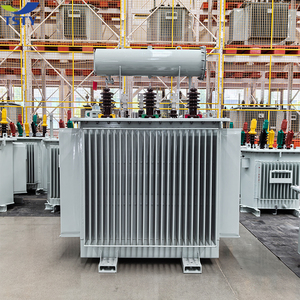
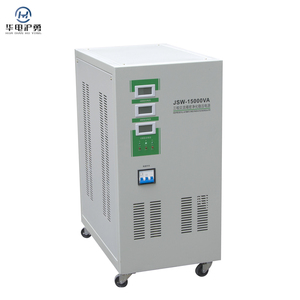
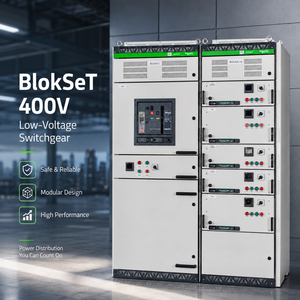
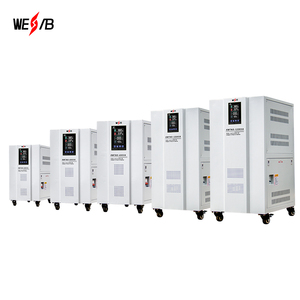
Integrated Power Distribution & Regulation Hardware
Direct OEM-engineered assemblies designed for generator synchronization, voltage regulation, harmonic mitigation, and sub-station distribution.
Anatomy of Modern Industrial Generator Control Panels (GCP)
In contemporary power system engineering, an industrial Generator Control Panel (GCP) functions far beyond basic engine start/stop cycling. Within mission-critical topologies—encompassing continuous process mining, hyperscale Tier-IV data centers, offshore drill ships, and utility peak-shaving installations—the control panel operates as the centralized nervous system. It orchestrates real-time parameter telemetry, dynamic isochronous load sharing, automatic synchronized paralleling, transient recovery voltage suppression, and coordinated fault clearing.
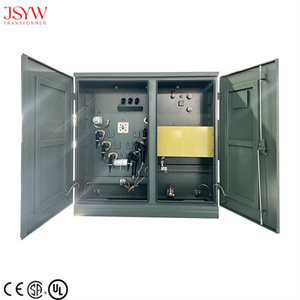
High-reliability Chinese switchgear and generator control panel manufacturers leverage advanced modular enclosures constructed under IEC 61439-1/2 and GB/T 7251 standards, providing Form 4b internal segregation. By physically isolating the digital automation architecture (PLC, SCADA, automatic mains failure [AMF] controllers) from the main copper busbar chambers and air circuit breakers (ACB), operational personnel are thoroughly safeguarded against internal arc flash events up to rated short-circuit withstand levels reaching 150kA.
Automatic Synchronizing & PMS
Microprocessor-driven phase match detection under ±0.1 Hz and ±2 degrees phase difference. Precision voltage trimming via analog bias ±10V or CANbus SAE J1939 protocols directly into electronic governors and automatic voltage regulators (AVR).
Galvanic Protection & Breaking
Coordinated discrimination using four-pole or three-pole motorized draw-out Air Circuit Breakers (ACBs) with solid-state trip units (LSIG). Complete transient insulation resistance tested to 5kV surge withstand levels.
Dual-Redundant SCADA & HMI
Industrial PLC platforms combined with multi-touch color graphic touchscreens. Modbus TCP/IP, Profinet, IEC 61850 protocol support with isolated fiber-optic communication nodes avoiding ground potential rise during earth faults.
Future Procurement & Technology Trends in Generator Automation
Global energy transitions are fundamentally reshaping electrical panel requirements. EPC procurement managers are shifting away from standalone, isolated diesel generators toward integrated hybrid microgrid switchboards. When evaluating Chinese manufacturing partners, overseas engineering consultants are prioritizing several critical technological vectors:
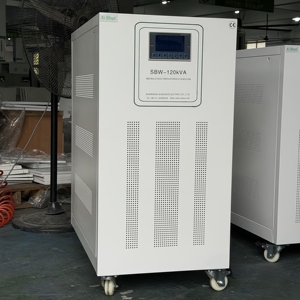
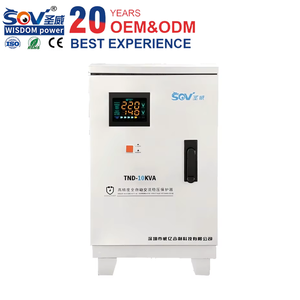
1. Active Dynamic Load Management: Modern data centers and mining sites operate with substantial Variable Frequency Drive (VFD) loads and non-linear power supplies. Traditional generator control panels often trip due to reverse power surges or voltage harmonics during step-load changes. Leading Chinese export manufacturers integrate real-time static voltage stabilizers and active compensation filters directly upstream of the main distribution switchgear.
2. Solid-State Automatic Transfer Switching (ATS): The transition from motorized changeover contactors to high-speed SCR-based static transfer switches eliminates the standard 50–100ms interruption window, preserving continuity for sensitive CNC machine controllers and robotic manufacturing cells without requiring oversized battery UPS infrastructures.
Drawing from an automation heritage that began in 1990 building complex PC, PLC, and SCADA control panels—including explosion-proof, pressurized, and intrinsically safe enclosures for hazardous chemical and offshore environments—our production facility spans over 5,500 m² of dedicated manufacturing and testing infrastructure.
Every generator control panel, distribution switchboard, and magnetic component undergoes 100% computerized routine validation prior to sea-worthy packaging. We do not rely on sample testing; every unit leaving the facility is subjected to rigorous factory acceptance testing (FAT):
✓
Automatic Computerized Testing ConsoleSimultaneous 3-phase automated primary/secondary injection verifying current transformer ratios and tripping curves.
✓
Double Voltage Double Frequency (DVDF)High-frequency induced overvoltage testing verifying turn-to-turn and phase-to-phase insulation withstand capabilities.
✓
Open-Circuit & Short-Circuit (OC/SC) TestingComputerized load loss and core impedance measurement validating copper loss dissipation under continuous full load.
Infrared Radiometric ThermographyCalibrated thermal imaging under full rated test currents to verify absence of thermal bottlenecks or unbalanced heating.
✓
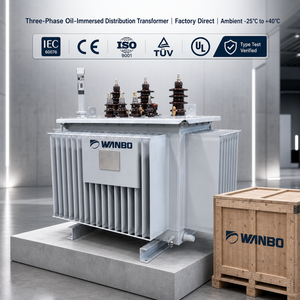
Full CE Marking & IEC ComplianceCertified compliance with IEC 61439-1/2, IEC 60076, and regional utility grid interconnection benchmarks.
Frequently Asked Questions: Global B2B Generator Switchgear Sourcing
What is the critical distinction between a standard AMF panel and a multi-genset synchronizing control panel?
An Automatic Mains Failure (AMF) panel primarily monitors a single utility grid line and triggers a single generator startup when grid voltage dips below specified thresholds, transferring the critical load via an interlocked contactor or motorized breaker. In contrast, a synchronizing control panel orchestrates multiple generators operating in parallel onto a common busbar. It dynamically matches phase angles, frequency, and voltages via PID controls interacting directly with the electronic governor and AVR, executing isochronous or droop real/reactive (kW/kVAR) load sharing according to fluctuating site demands.
How do Chinese switchgear factories verify the short-circuit breaking capacity (Icu / Ics)?
Tier-one factories perform type-testing verification at accredited high-power electrical testing laboratories (such as ASTA, KEMA, or national high-voltage apparatus testing institutes) in strict accordance with IEC 61439-2. The assemblies are subjected to rated short-time withstand currents (Icw) for 1 or 3 seconds (e.g., 50kA, 80kA, or 150kA) to verify that electrodynamic stresses do not cause busbar deformation, insulation breakdown, or mechanical collapse. Routine production units are subsequently validated with calibrated torque checks, busbar clearance spacing verifications, and dielectric flashover tests.
Can our engineering team specify international switchgear components (ABB, Schneider, Siemens) inside your custom enclosures?
Yes. As custom OEM/ODM manufacturers, we regularly design and fabricate control enclosures around client-specified primary apparatus. Our engineering department develops custom 3D CAD copper busbar layouts and computerized laser cutting tooling to integrate circuit breakers, digital protective relays, and automation modules from major global brands while ensuring complete thermal dissipation, mechanical support, and type-tested compliance.
What parameters are needed to receive a rapid, comprehensive technical proposal and price quotation?
To generate a precise electrical design and commercial proposal within 24 hours, provide: (1) Single Line Diagram (SLD), (2) Number of generator sets and their respective kW/kVA ratings, power factor, and terminal voltages, (3) Required system frequency (50Hz or 60Hz), (4) Busbar rated continuous current and short-circuit withstand rating (kA/1s), (5) Preferred form of segregation (e.g., Form 2b, Form 3b, Form 4b), (6) Ingress protection rating (IP31, IP42, IP54), and (7) Required communication protocol (Modbus RTU, Modbus TCP, Profinet, IEC 61850).
How does the factory address harmonic distortion generated by non-linear industrial loads?
When generators feed industrial loads featuring VFDs, large servo systems, or UPS rectifiers, sub-transient reactance can exacerbate harmonic voltage distortion, leading to alternator rotor heating and switchgear nuisance tripping. Our engineering team integrates line/load reactors, customized dry-type isolation transformers, and active harmonic filters (AHFs) directly into the switchgear suite to suppress Total Harmonic Distortion (THD-i) below 5%, in compliance with IEEE 519 standards.
What warranty and global commissioning support do you provide for international EPC projects?
All engineered switchgear and transformer equipment carries a standard 18-to-24 month comprehensive factory warranty. For international installations, we deliver complete Factory Acceptance Test (FAT) computerized video documentation, comprehensive wiring schematics with terminal designations, step-by-step commissioning guides, and real-time remote engineering assistance via secure industrial IoT gateways during initial on-site energization.
Accelerate Your Project with Custom Electrical Switchgear
Consult with our senior power systems application engineers. Get detailed Single Line Diagram reviews, custom enclosure drawings, and factory-direct commercial quotations within 24 hours.
 CEMarked