 CEMarked CEMarked
Comprehensive portfolio from high-capacity smoothing and current limiting air core inductors to ruggedized distribution units.
Comprehensive technical analysis of magnetic linearity, structural thermodynamics, and stray flux mitigation.
In ultra-high voltage (UHV) networks and industrial power circuits, short-circuit current dynamics impose extreme thermal and mechanical stresses. Unlike conventional iron-core inductors, an air-core reactor incorporates zero ferromagnetic material within its central flux path. This physical decoupling provides absolute immunity to magnetic saturation under peak symmetrical and asymmetrical fault currents. The inductance parameter (L) remains perfectly linear regardless of whether the instantaneous excitation current is rated load (In) or catastrophic bus fault current reaching multiples of 25–40 times In. China's top tier manufacturing facilities have refined this topology through multi-concentric strand winding, achieving optimal inductive impedance balance across parallel packages.
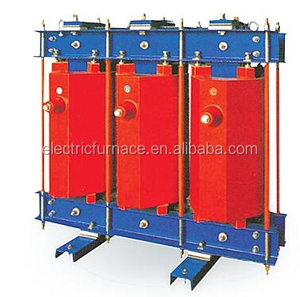
Modern air-core current-limiting and filtering reactors manufactured in benchmark plants rely on continuous glass-filament roving impregnated with high-grade epoxy resin cured under strict thermal thermal envelopes. This cylindrical composite enclosure serves two critical roles: dielectric isolation between turns and axial/radial containment against violent Laplace forces experienced during sub-cycle short-circuit peaks. Windings utilize multiple parallel-wound film-insulated or glass-wrapped rectangular aluminum/copper conductors configured in concentric layers. The spacing between layers creates dedicated vertical natural-cooling chimneys that guarantee continuous convective heat dissipation, preventing local hotspots and preserving dielectric life beyond 30+ operational years.
| Reactor Classification | System Voltage (kV) | Rated Inductive Current | Primary Grid / Plant Application | Standard Compliance |
|---|---|---|---|---|
| Current Limiting Reactor (CLR) | 10 kV – 110 kV | Up to 4000 A | Limits bus short-circuit level to breaker interruption limits | IEC 60076-6 / IEEE C57.16 |
| Shunt Reactor (Inductive Comp.) | 35 kV – 500 kV | Continuous Var-rated | Ferranti effect reduction on unloaded long transmission lines | IEC 60076-6 / GB/T 1094.6 |
| Filter Reactor (Tuned / High Pass) | 6.6 kV – 35 kV | Up to 2500 A | HVDC conversion, arc furnace filtering, 5th/7th harmonic blocks | IEC 60076-6 / IEEE 519 |
| Damping & Inrush Reactor | 10 kV – 35 kV | Up to 1500 A | Capacitor bank back-to-back switching transient damping | IEC 60076-6 / ANSI |
| Smoothing Air-Core Reactor | DC link up to 100 kV | Up to 5000 A | Rectified DC ripple suppression in electrochemical and traction grids | IEC 60076-6 |
Crucial industry shifts engineering buyers and EPC contractors must account for over the 2025–2030 horizon.
Because air core inductors radiate unconfined external magnetic lines, substation installation traditionally requires expansive clearance perimeters to prevent electromagnetic induction into nearby metallic structures, cables, and fencing. Future procurement prioritizes optimized multi-tier spatial layouts and directional shielding, allowing safe proximity deployment inside offshore wind substations and space-constrained municipal distribution nodes.
Substation digitization mandates transition toward proactive condition monitoring. Next-generation reactors embed continuous optical fiber DTS and Rogowski coils directly within internal encapsulation chimneys. This enables real-time hot-spot visualization, acoustic vibration diagnostics, and seamless integration with IEC 61850 SCADA substations without dielectric degradation.
The explosive rollout of massive solar clusters, offshore wind turbines, and HVDC long-distance transmission corridors necessitates high-rating filter and smoothing reactors capable of handling extreme harmonic spectrums (up to the 50th harmonic) alongside significant continuous DC bias currents, driving buyers toward custom thermal class H (180°C) insulation systems.
Combining over three decades of panel automation mastery with dedicated heavy magnetics fabrication plants.
Every fabricated unit undergoes rigorous testing on automated computerized panels before dispatch, including Double Voltage Double Frequency (DVDF) induced overvoltage validation, milli-ohm precision winding resistance verification, precision digital LCR inductance checks, and Megger insulation resistance testing.
With engineering foundations rooted in custom PLC/SCADA control cabinets and hazardous-area certified systems since 1990, we construct inductors with clean terminal geometry, optimized footprint ratios, and verified thermal inrush capacities that streamline field installation for EPC contractors.
Our 5,500 m² heavy industrial facility manufactures magnetics meeting international CE requirements, IEEE standards, and IEC design codes, having supplied over 45 prominent global OEMs, utility substations, and heavy continuous process facilities in steel, mining, and power generation.
Essential answers for substation designers, electrical consultants, and procurement managers.