 CEMarked CEMarked
Export-ready step-down transformers, voltage regulation modules, switchboards, and harmonic filtration chokes engineered in full conformance with European CE standards and global industrial codes.
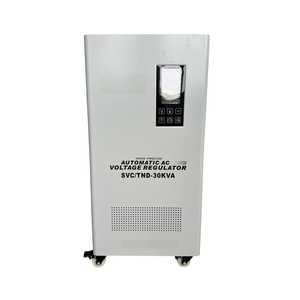
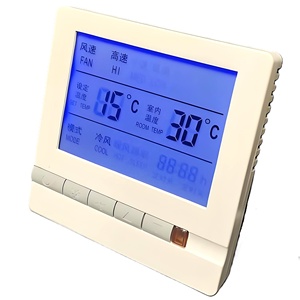
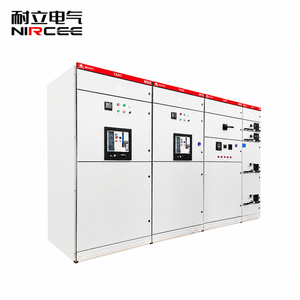
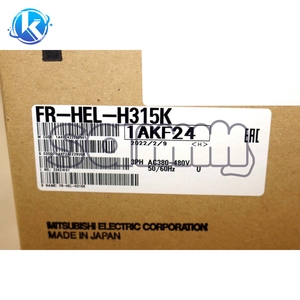
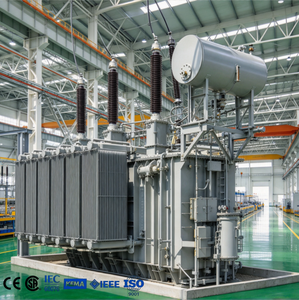
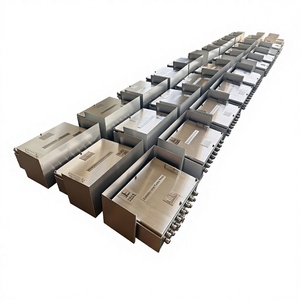
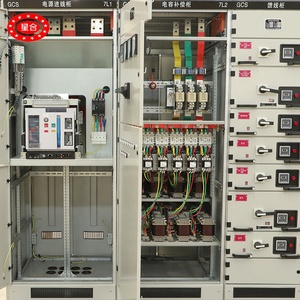
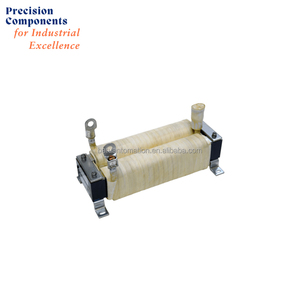
Operating as a key technical division within the Prima Automation (India) Pvt. Ltd. umbrella, our manufacturing lineage combines deep controls engineering with cutting-edge transformer physics.
Founded on an industrial automation pedigree dating back to 1990, we understand how a step-down transformer behaves when interfacing with modern PLC racks, high-inrush motor contactors, and variable frequency drives.
Every exported step-down unit carries legitimate European Conformity (CE) documentation adhering to the Low Voltage Directive (LVD) 2014/35/EU, EMC Directive 2014/30/EU, and IEC 61558-1/2-4 standards.
Our integrated plant in Santej, Ahmedabad houses computerized test consoles executing rigorous factory acceptance testing (FAT) on 100% of finished magnetics prior to export packaging.
A rigorous examination of core electromagnetic parameters, vector groupings, insulation classes, and thermal dissipation metrics essential for plant EPCs and machine OEM procurement teams.
The efficiency of industrial step-down transformers is fundamentally governed by core excitation mechanics. High-tier industrial units engineered by Prima utilize Cold-Rolled Grain-Oriented (CRGO) silicon steel laminations (grades M3, M4, and laser-treated ZDKH). The magnetic domains within CRGO are structurally aligned in the rolling direction, which drastically minimizes hysteresis loop area and eddy current generation. For installations operating under continuous base loads—such as data centers, offshore substations, and critical chemical processing—the selection of 45-degree mitered step-lap core stacking prevents magnetic flux congestion at core-yoke junctions, keeping no-load excitation losses well below the maximum thresholds mandated by European Commission Regulation (EU) 2019/1783 (Tier 2 Ecodesign Directive).
In modern manufacturing plants, the proliferation of solid-state electronics, Variable Frequency Drives (VFDs), uninterruptible power supplies (UPS), and servo drives generates severe harmonic currents (notably 5th, 7th, 11th, and 13th order harmonics). Standard distribution transformers fail rapidly under these conditions due to stray eddy losses in conductors and neutral conductor overheating caused by triplen harmonics.
When sourcing step-down transformers for drive automation or telecommunications power conditioning, specifying the correct K-Factor (per ANSI/IEEE C57.110) is paramount:
The debate between electrolytic copper (ETP, 99.99% conductivity) and electrical-grade aluminum conductors directly impacts thermal mass and footprint. Our CE-marked step-down series utilizes dual-coated Class H (180°C) or Class C (200°C) enamel-insulated copper magnet wire or vacuum pressure impregnated (VPI) copper foil. Copper foil windings eliminate axial short-circuit forces during secondary faults, providing unparalleled mechanical strength compared to traditional circular wire wound coils. Combined with Nomex® aramid insulation sheets, this construction allows continuous full-load operation in ambient environments up to 55°C with a Class F (100K) or Class B (80K) temperature rise margin, substantially extending component lifecycle beyond 30 years.
| Technical Specification | VPI Dry-Type Control Transformer | Cast Resin Dry-Type (CRT) | Oil-Immersed Power Step-Down |
|---|---|---|---|
| Standard Rating Range | 50VA – 250kVA | 100kVA – 3150kVA | 500kVA – 25MVA |
| Input Voltages (Primary) | 208V, 230V, 380V, 415V, 480V, 690V | 3.3kV, 6.6kV, 11kV, 22kV, 33kV | 11kV, 33kV, 66kV, 110kV, 132kV |
| Output Voltages (Step-Down) | 12V, 24V, 48V, 110V, 120V, 220V, 230V | 208V, 380V, 400V, 415V, 440V, 690V | 400V, 415V, 3.3kV, 6.6kV, 11kV, 33kV |
| Winding Conductor Metallurgy | Class H ETP Copper / Electrolytic Strip | Electrolytic Copper or Foil Clad | Continuous Transposed Copper (CTC) |
| Cooling Classification | AN (Air Natural) / AF (Air Forced) | AN / AF (up to +40% rating boost) | ONAN / ONAF / OFAF |
| Dielectric / Insulation Medium | High-grade Polyester / Epoxy Resin VPI | Class F / H Epoxy Resin with Quartz Flour | Mineral Insulating Oil / Synthetic Ester |
| Environmental / Fire Rating | IP00, IP20, IP23, NEMA 1, NEMA 3R | Class E2, C2, F1 (Flame Retardant) | Outdoor Substation Bunded / IP65 |
| Typical Application Profile | Control cabinets, OEM machinery, HVAC | High-rise buildings, marine, cleanrooms | Utility grid substations, heavy metallurgy |
Procurement engineers and industrial project buyers face evolving regulatory, economic, and geopolitical variables when acquiring power infrastructure. In 2025 and beyond, procurement decisions for step-down transformers are driven by four strategic imperatives:
Industrial power accounts for more than 70% of lifecycle cost over a 20-year span. Modern buyers explicitly evaluate Capitalized Cost of Losses (A and B factors) where purchasing contracts penalize vendors for excess load and no-load losses, favoring ultra-low loss step-lap designs.
Under European Union EcoDesign Directive (EN 50588-1), step-down equipment imported into EU territory must demonstrate certified compliance with stringent no-load (Po) and load (Pk) loss caps. Verification audits during customs clearance make authentic test certifications non-negotiable.
Lengthy lead times from traditional Western European and North American makers (often exceeding 40 to 65 weeks) have accelerated direct sourcing from high-capacity Indian manufacturing hubs that maintain massive raw material inventories of certified CRGO steel and Class H copper.
The step-down transformer is undergoing rapid technological transformation from a passive electromagnetic component to an intelligent, digitally connected node in the industrial IoT ecosystem. Key engineering shifts include:
Authoritative technical guidance compiled by our chief electrical engineers to streamline transformer sizing, certification compliance, and global project dispatch.
Benefit from direct manufacturer pricing, in-house computerized quality testing, and extensive engineering application experience. Trusted by industry titans worldwide including Siemens, Tata, Jindal, Adani, ONGC, UltraTech, and Suzlon for critical plant electrification and equipment exports.