 CEMarked CEMarked
Explore our industrial-duty current limiting reactors, harmonic filtration equipment, and heavy-duty distribution units engineered for high short-circuit withstand capabilities.
Understanding electromagnetic design, prospective short-circuit mitigation, and transient recovery dynamics in demanding industrial grids.
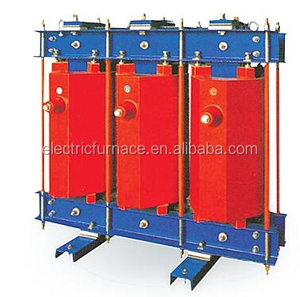
A CE certified current limiting reactor is an inductive device inserted in series within a distribution system to throttle prospective symmetrical and asymmetrical prospective short-circuit faults. In high-density industrial architectures, prospective fault levels often exceed the interrupt ratings of downstream switchgear.
By inserting an engineered inductive reactance X_L = 2*pi*f*L, the peak prospective short-circuit let-through current is constrained within safe operational thresholds, preserving circuit breakers, busbars, and disconnect switches from thermal destruction and catastrophic electrodynamic stresses.
The design topography of current limiting reactors bifurcates into dry-type air-core and gapped iron-core topologies. Air-core configurations exhibit complete magnetic linearity under extreme transient overcurrents without magnetic saturation, ensuring consistent impedance throughout the peak duration of the fault.
Conversely, our iron-core reactors utilize stepped radial laminations with distributed non-magnetic air gaps. This reduces physical dimensions while guaranteeing linear performance up to 20 to 30 times rated nominal current, specifically tailored for spatial constraints in modular containerized substations.
In addition to catastrophic fault containment, current limiting reactors suppress high-frequency line perturbations, notch effects generated by 6-pulse and 12-pulse rectifiers, and severe current inrush during capacitor bank energization.
When configured as series damping reactors or detuning reactors within power factor correction networks, they mitigate parallel resonance risks, protect dry-type and oil-immersed power transformers from premature thermal aging, and ensure strict compliance with IEEE 519 and IEC 61000-3-4 harmonic distortion guidelines.
Analysis of evolving engineering standards, renewable energy expansion, and long-term asset life cycle costing in magnetics procurement.
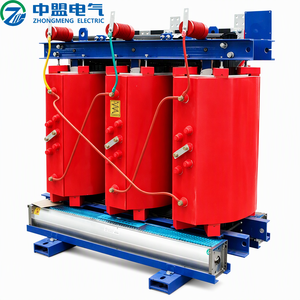
Global utility infrastructures require rapid decoupling capabilities at Point of Common Coupling (PCC) junctions. The proliferation of multi-megawatt Battery Energy Storage Systems (BESS) and utility-scale solar inverter fields creates elevated fault-current contributions. Forward-looking procurement directives prioritize dry-type cast resin and air-core series reactors engineered to absorb continuous high-frequency ripple currents alongside bidirectional power flows without localized hotspot development.
Procurement frameworks across the EU and North America have pivoted from initial purchase price valuation to comprehensive Total Cost of Ownership (TCO). High electrical efficiency, achieved through high-purity electrolytic copper windings, Class H and Class C aramid paper insulation systems, and precision-engineered air channels, significantly curbs I²R ohmic losses over 25–30 year service lifespans. Lower running temperatures simultaneously extend the operational longevity of adjacent switchgear installations.
Future-ready reactor units feature pre-integrated fiber optic thermal probes (FOT) and RS485/Modbus RTU sensor hubs embedded directly into the winding segments. Real-time temperature gradient and acoustic vibration logging enables predictive maintenance architectures, mitigating unscheduled substation downtime and feeding actionable data into cloud-native SCADA and DCS industrial management systems.
Operating from our modern 5,500 m² production hub in Santej, Ahmedabad, we leverage over 25 years of engineering authority backed by our parent company, Prima Automation (India) Pvt. Ltd. (Est. 1990). Every single reactor and transformer undergoes stringent in-house verification.
Direct technical answers addressing standards compliance, sizing criteria, and project specifications.
Our reactors are designed, built, and tested in accordance with IEC/EN 60076-6 (Power Reactors), alongside relevant Low Voltage Directive (LVD 2014/35/EU) and Electromagnetic Compatibility (EMC 2014/30/EU) protocols required for CE marking. In addition, routine electrical verification complies with IEEE C57.21, ensuring short-circuit withstand capabilities, dielectric performance, and thermal classification are universally recognized by EPC contractors and global certifying bodies.
Reactance percentage (%X) represents the reactive voltage drop across the reactor relative to nominal system voltage under rated current. For motor feeder and drive input protection, a 3% to 5% impedance reactor is standard to dampen mains transients and absorb harmonic frequencies without causing excessive operational line drop. For dedicated current-limiting duties on substation bus-ties, %X is calculated based on the differential between available grid prospective short-circuit kA and the maximum interrupting capability of downstream switchgear.
To produce an optimized technical and commercial proposal, please provide: rated continuous current (A), system operating voltage and frequency (50/60 Hz), required inductance (mH) or target reactance (% impedance), prospective system short-circuit current (kA) and fault duration (typically 1s to 3s), enclosure IP protection level (IP00 open frame up to IP54 packaged), insulation thermal class (F or H), and any environmental parameters such as high ambient temperature or corrosive atmospheres.
Linearity is achieved through electromagnetic finite element simulation (FEA) and rigid material control. In our iron-core designs, we employ high-grade, cold-rolled grain-oriented (CRGO) electrical steel partitioned by uniform ceramic or non-metallic spacers. These distributed air gaps dissipate magnetic flux concentrations, preventing core saturation up to the rated prospective short-circuit peak. In air-core configurations, the complete absence of magnetic steel inherently preserves constant inductance irrespective of current magnitude.
Every manufactured unit is dispatched with complete inspection certificates covering: winding resistance measurement, inductance verification across all phases via digital LCR bridge, applied high-voltage insulation tests, insulation resistance (Megger) before and after dielectric stress, and loss measurement. Additional type test reports, such as temperature-rise tests, sound level testing, and dynamic short-circuit performance verifications, are available upon request.
Whether you require standard line/load reactors up to 2500A, customized bus-tie fault-limiting inductors, or specialized dry-type harmonic suppression reactors, our application engineering team is available for custom sizing and tender compliance.